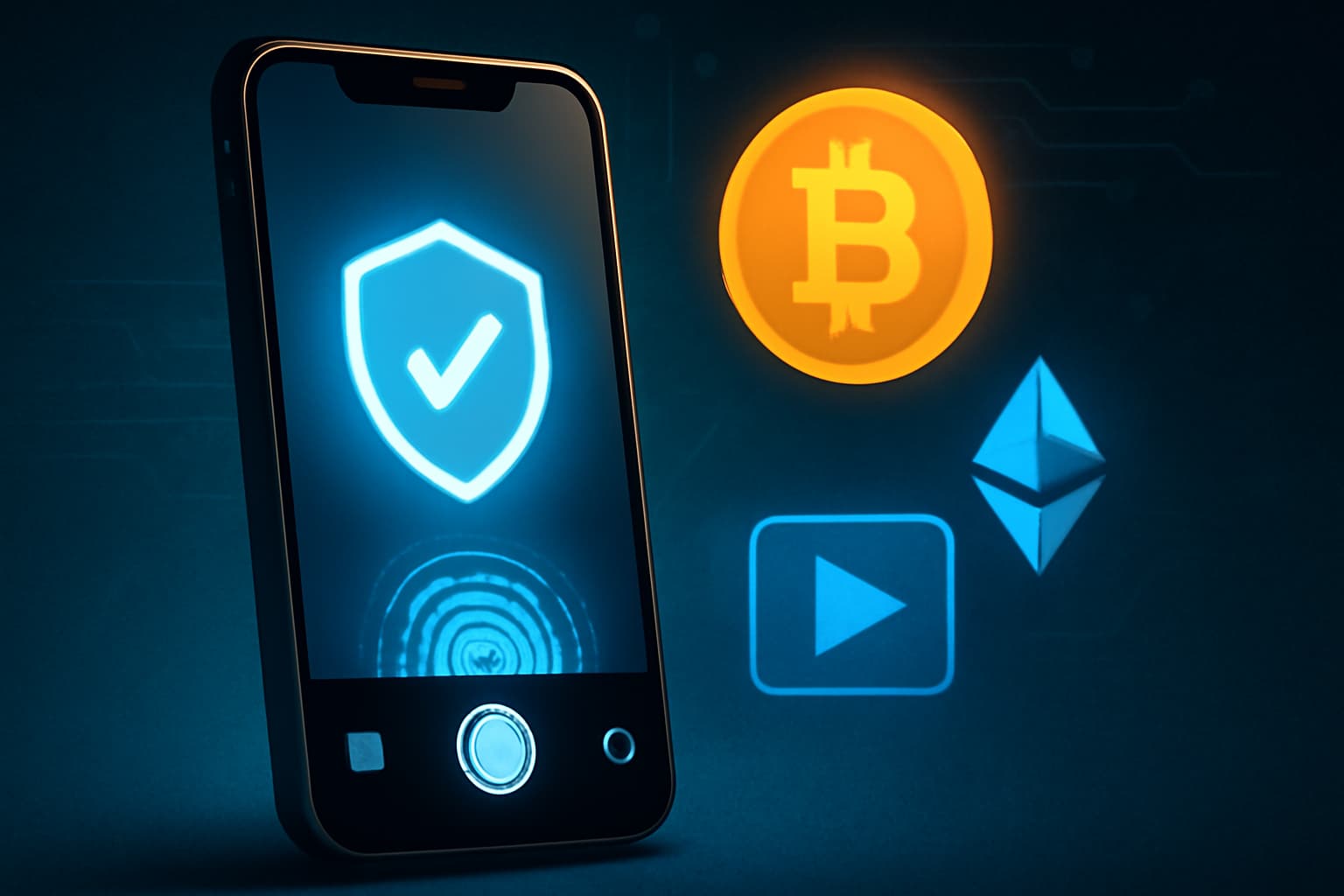
Succinct Labs Launches ZCAM iPhone App for Cryptographic Media Verification
Succinct Labs says ZCAM creates tamper-proof fingerprints for iPhone photos and videos, linking media to the capture device as Deloitte research projects U.S. fraud losses could reach $40 billion by 2027.
Fact Check
The core claim is strongly supported by Succinct's own announcement, "Introducing ZCAM: A Cryptographic Camera to Prove What's Real," which explicitly says ZCAM is an iPhone camera app launched on April 23, 2026 and that it cryptographically signs media at capture to create tamper-proof, verifiable authenticity records bound to the device using Secure Enclave and App Attest. The supporting statistic is also backed by a primary source: Deloitte's "Generative AI is expected to magnify the risk of deepfakes and other fraud in banking," which states that generative AI could enable U.S. fraud losses to reach about $40 billion by 2027. Secondary coverage from CoinPost and Odaily is consistent with the official announcement. I found no authoritative contradiction.
Summary
Succinct Labs has launched ZCAM, an iPhone camera app that creates tamper-proof fingerprints for photos and videos at the moment of capture to verify authenticity. According to the provided information, the app links media to the capture device so users can confirm that content came from a real device and was not digitally altered. Succinct Labs positioned the launch as a response to rising fraud risks, citing Deloitte research that projects U.S. fraud losses could increase from $12.3 billion in 2023 to $40 billion by 2027.
Terms & Concepts
- Cryptographic media verification: A method of using mathematical proofs or signatures to confirm a photo or video’s origin and integrity.
- Tamper-proof fingerprints: Unique verification data attached to media that helps show whether the original content has been modified.
- Authenticity: The property of media being genuine and verifiably tied to its original capture source.