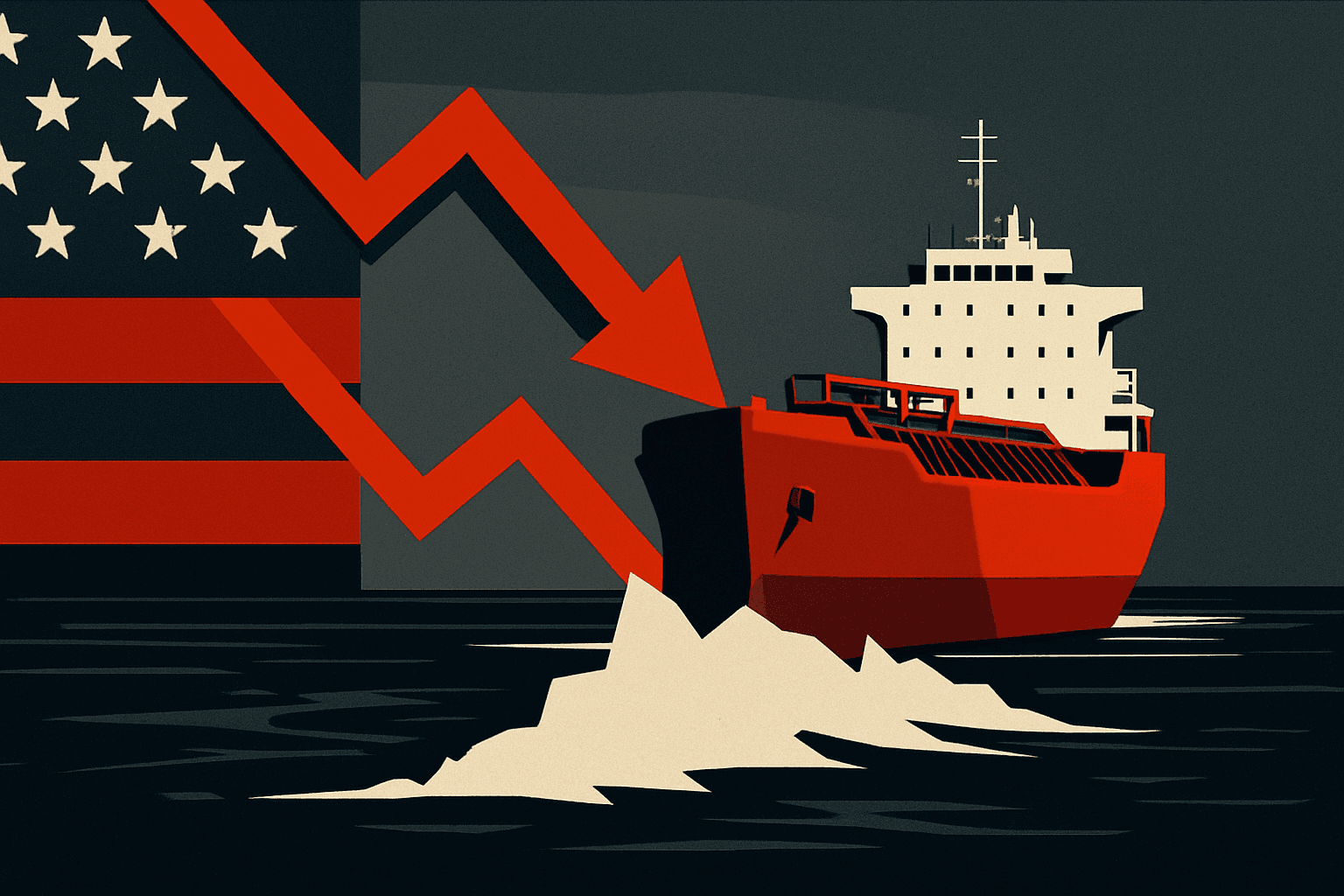
US-Iran framework reopens Hormuz, but 500 ships remain stranded
Even as the Strait of Hormuz begins reopening under a preliminary US-Iran framework, Gulf states are reassessing US security guarantees after months of strikes on Bahrain, Qatar and the UAE.
A preliminary US-Iran framework to end the conflict and reopen the Strait of Hormuz has not yet restored normal shipping, with maritime operators and analysts warning that a broader recovery could take weeks and that oil supply through the waterway may need about a month to recover to more than 50% of normal levels. Western maritime security agencies and Sparta Commodities' Neil Crosby said mine-clearing, unresolved safety risks and the slow release of stranded vessels are likely to delay any return to normal traffic. The New York Times reported on June 15 that Washington and Tehran had reached the framework, but Safesea Group, Hoegh Autoliners, the Japan Ship Owners' Association and BIMCO's Jakob Larsen said large-scale transit would not resume without clear security assurances. Kpler said about 500 large merchant ships remain stranded in the Persian Gulf, along with 38 related vessels, while about 11,000 seafarers are awaiting evacuation. The ceasefire framework is also reshaping Gulf security calculations. The New York Times reported that after the June 15 US-Iran framework ceasefire, Gulf states began reassessing their long-standing reliance on US security commitments following nearly four months of conflict in which Iran and its allies struck Bahrain, Qatar and the UAE, hitting military and energy infrastructure and disrupting Hormuz Strait traffic. Analysts questioned Washington's defensive response. After a roughly 5% drop in Brent and WTI to around $83 and $80.5, Crosby said oil price risks now skew upward because further disruption remains possible even if the political process advances.
- Strait of Hormuz: A strategic maritime chokepoint for global oil and commercial shipping traffic.
- mine-clearing: The process of locating and removing naval mines so vessels can pass safely.
- Brent and WTI: Two widely used global crude oil price benchmarks tracked by energy markets.