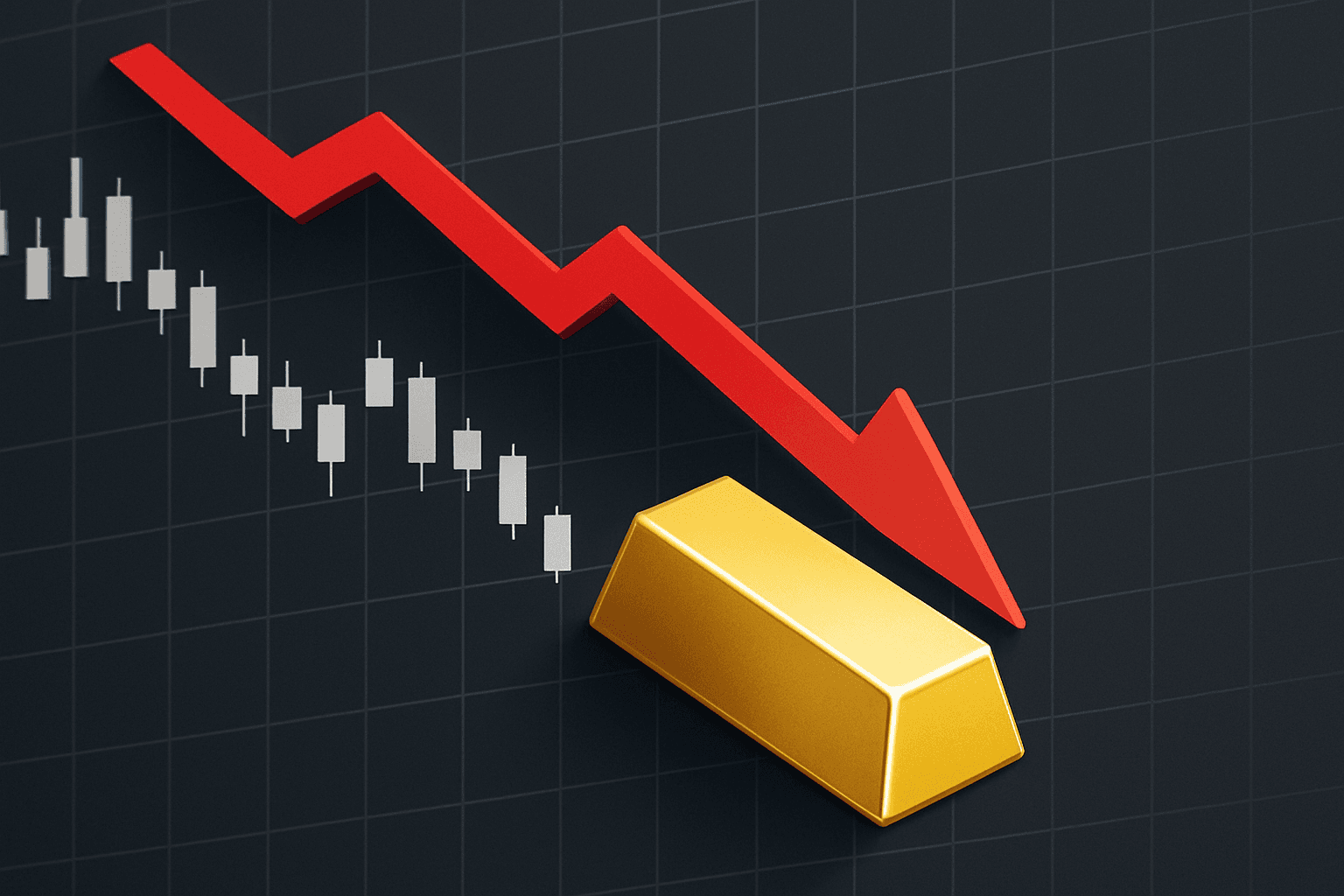
Gold declines as traders weigh US and Iran signals ahead of talks
Gold opened the second half of 2026 lower after its worst quarter since 2013, with prices pressured by higher-rate fears even as Amundi and central bank reserve trends point to longer-term support.
Gold extended its slide at the start of the second half of 2026 after suffering its worst quarterly performance in 13 years. Gold futures fell 1.24% to $3,989.00 and spot gold dropped 0.82% to $3,974.51 on Wednesday, following a 16% decline in the three months to June 30 and leaving bullion down 7.76% for the year. The metal has retreated sharply from its Jan. 29 record high of $5,586.20 as the Iran war lifted energy prices, revived inflation concerns and increased the risk of further Federal Reserve rate hikes, a backdrop that typically hurts non-yielding assets such as gold. Even so, Amundi Investment Institute said gold still has a role in portfolios as inflation volatility, high public debt and central bank diversification away from dollar-based assets continue to support demand. Monica Defend, head of Amundi Investment Institute, said investors face a world of more volatile inflation, growing concentration risks and pressure on central bank independence, arguing that portfolios should diversify across currencies and include real assets and gold. The World Gold Council's annual Central Bank Gold Reserves survey also found that more global central banks are poised to increase their gold reserves over the next year. Silver also came under pressure, with futures down 3.34% at $57.49 and spot silver lower 1.31% at $57.80.
- spot gold: Gold priced for immediate delivery rather than a future date.
- non-yielding asset: An asset that does not pay interest or income while it is held.
- central bank diversification: A strategy in which central banks spread reserves across different assets instead of concentrating them in one currency or market.