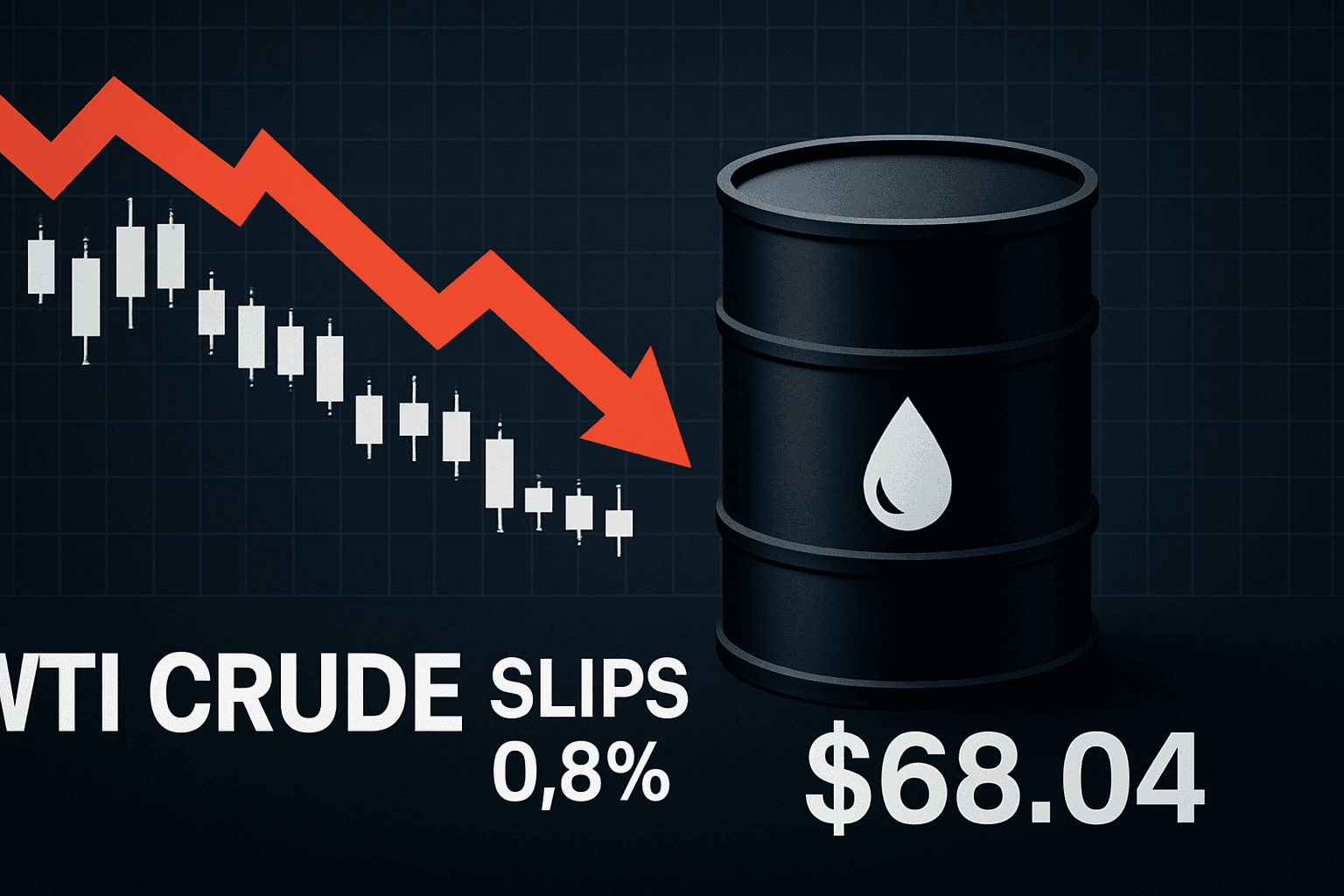
WTI crude slips 0.8% to $68.04 as supply rises and tensions ease
Oil stayed near pre-conflict lows as U.S.-Iran peace efforts, recovering Gulf supply and easing Strait of Hormuz risks pressured prices, though analysts cautioned shipping may not normalize immediately and Citi sees potential for oil to fall toward $60.
Oil prices remained near their lowest levels since before the U.S.-Israeli war on Iran began in late February as optimism over U.S.-Iran peace efforts, rising Gulf supply and easing concerns over the Strait of Hormuz weighed on the market. Brent was up 17 cents at $72.10 a barrel and WTI up 14 cents at $68.83 by 0155 GMT ahead of the U.S. Independence Day holiday, after front-month WTI had earlier traded down 0.3% at $68.46 and was later described as slipping 0.8% to $68.04. Citi Research said the U.S.-Iran process remains fragile and disputes over administration of the strait and transit fees persist, but it expects the memorandum of understanding to hold, shipping flows to normalize and oil prices potentially to fall toward $60 as Hormuz tensions ease. Kuwait's oil output rose to 1.65 million barrels per day in June from 580,000 bpd in May, and at least five supertankers carrying 10 million barrels of Saudi crude exited the Strait of Hormuz after Saudi Aramco shifted to spot pricing to speed sales in Asia. In the United States, average regular gasoline prices fell below $4 a gallon in June for the first time since March 30, according to AAA, after reaching their highest level in more than three years during the war, though experts cautioned vessel traffic through the strait may not return to normal immediately.
- Strait of Hormuz: A strategically important waterway through which a large share of global oil and LNG shipments passes.
- WTI crude oil futures: Contracts tied to U.S. benchmark crude prices for delivery at a future date.
- Spot pricing: Selling cargoes at current market prices rather than under longer-term contract pricing.