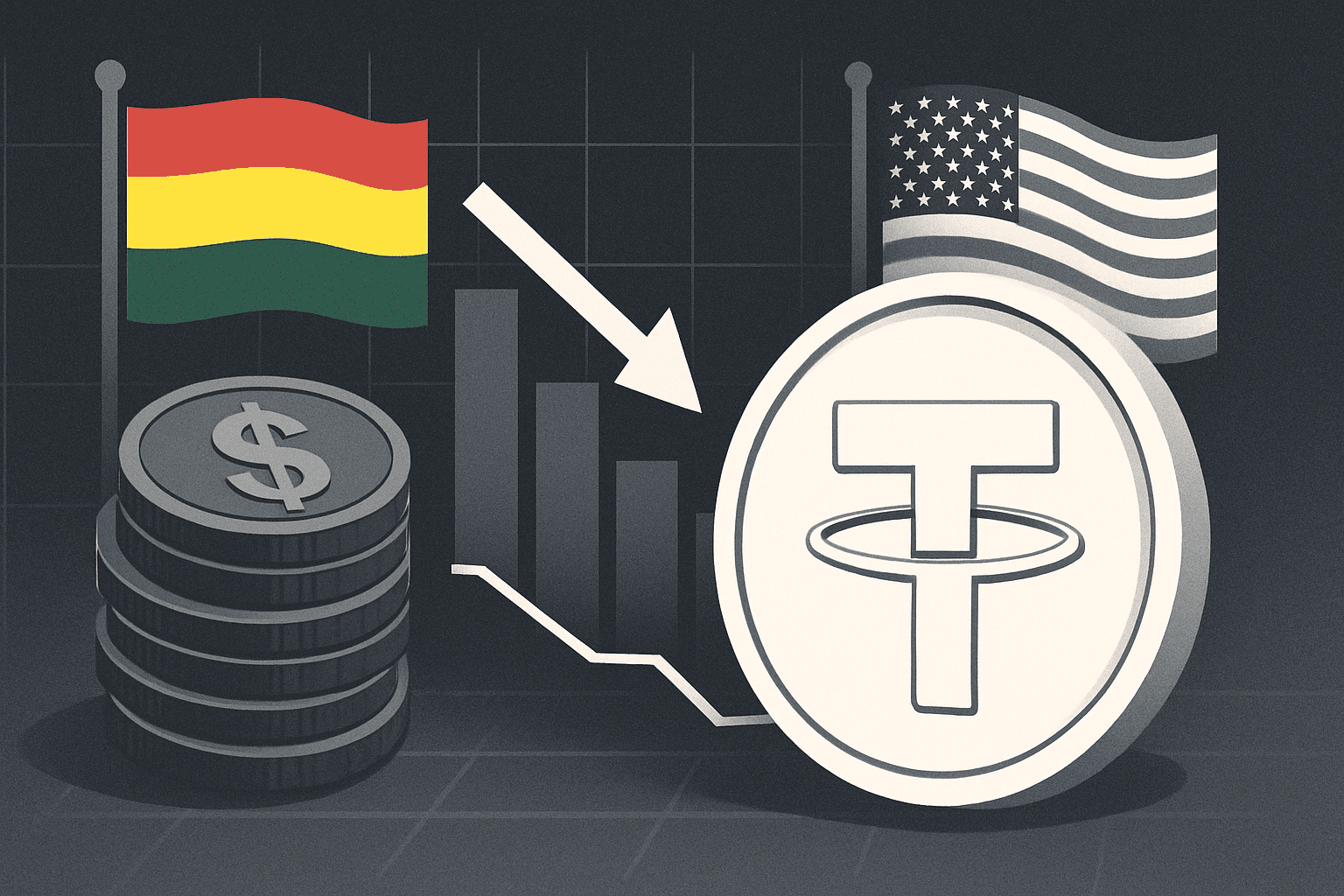
Bolivia weighs USDT for payments amid domestic dollar shortage
Officials are evaluating whether USDT could formally circulate in Bolivia’s payment system as demand for digital dollars grows, extending a policy shift that began with the easing of a long-standing crypto ban in 2024.
Bolivia is assessing whether Tether’s USDT could be formally integrated into the national payment system alongside the boliviano and the U.S. dollar, as the country responds to a shortage of hard currency and growing use of stablecoins for remittances and international payments. Jose Gabriel Espinoza, the Minister of Economy and Public Finance, said authorities are technically evaluating whether USDT could circulate as another currency within the payment network. The move would deepen a reversal of Bolivia’s earlier ban on currencies not issued by the Central Bank of Bolivia, a restriction reinforced in 2020 and eased in mid-2024. Espinoza’s comments build on earlier signals that Bolivia wants to bring digital assets into the banking system, even as compliance and anti-money-laundering requirements remain central to any formal rollout. Use of dollar-linked tokens has accelerated since the restrictions were relaxed. The new report says stablecoin card spending in Bolivia rose sixfold in 2025 after the 2024 easing, with much of the activity tied to cross-border payments for goods and services amid the dollar shortage. It also says many businesses already use USDT as a unit of account and that several Bolivian banks support the token. The broader trend reflects rising stablecoin use across Latin America, where remittances, inflation and scarce foreign exchange have driven demand. Tether CEO Paolo Ardoino said USDT is increasingly serving as a cornerstone in several emerging-market economies. The report also cites record stablecoin transaction volume of $1.78 trillion in June, with USDT accounting for 36% market share and USDC for more than 60%, while USDT supply reached $190 billion in May before easing to $184 billion.
- USDT: A dollar-pegged stablecoin issued by Tether.
- stablecoins: Crypto tokens designed to maintain a stable value, often by being linked to a fiat currency such as the U.S. dollar.
- unit of account: A standard used to price goods and services and record economic value.