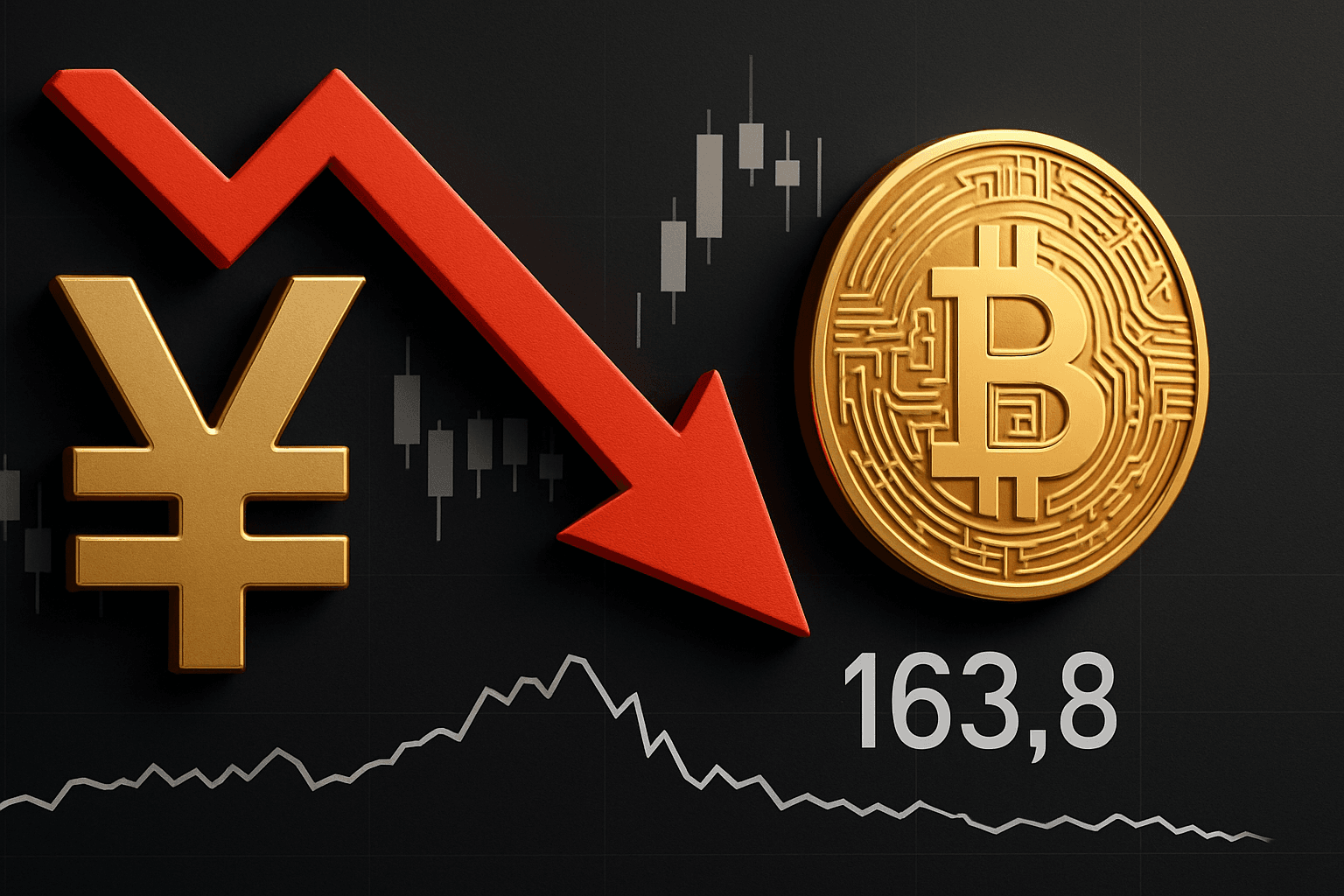
Yen hovers near 163.8 per dollar despite intervention warnings and BOJ hike talk
The currency stayed near a 1986 low as U.S. dollar strength, higher Treasury yields, oil above $100, Japan fiscal concerns and Middle East tensions outweighed official warnings and firmer inflation data.
The Japanese yen remained under heavy pressure near 163.8 per U.S. dollar, close to its weakest level since 1986, as markets looked past repeated official warnings about possible foreign-exchange intervention and reports that Bank of Japan officials may be open to faster rate hikes. Broader forces dominated, including firm U.S. dollar demand, rising U.S. Treasury yields, oil prices above $100, concerns over Prime Minister Sanae Takaichi’s fiscal policy, and worries that escalating U.S.-Iran tensions could hurt Japan because of its reliance on imported energy. Japan’s headline inflation rose to a six-month high in June, reinforcing expectations for further BOJ tightening, but the currency still fell 0.8% on the week and was on course for its worst weekly performance since May, when it weakened after Japan’s record currency intervention.
- Currency intervention: Official buying or selling in the foreign-exchange market to influence a currency’s value.
- U.S. Treasury yields: Returns on U.S. government bonds that influence global borrowing costs and currency markets.
- Headline inflation: The broad measure of consumer price growth before stripping out volatile items.