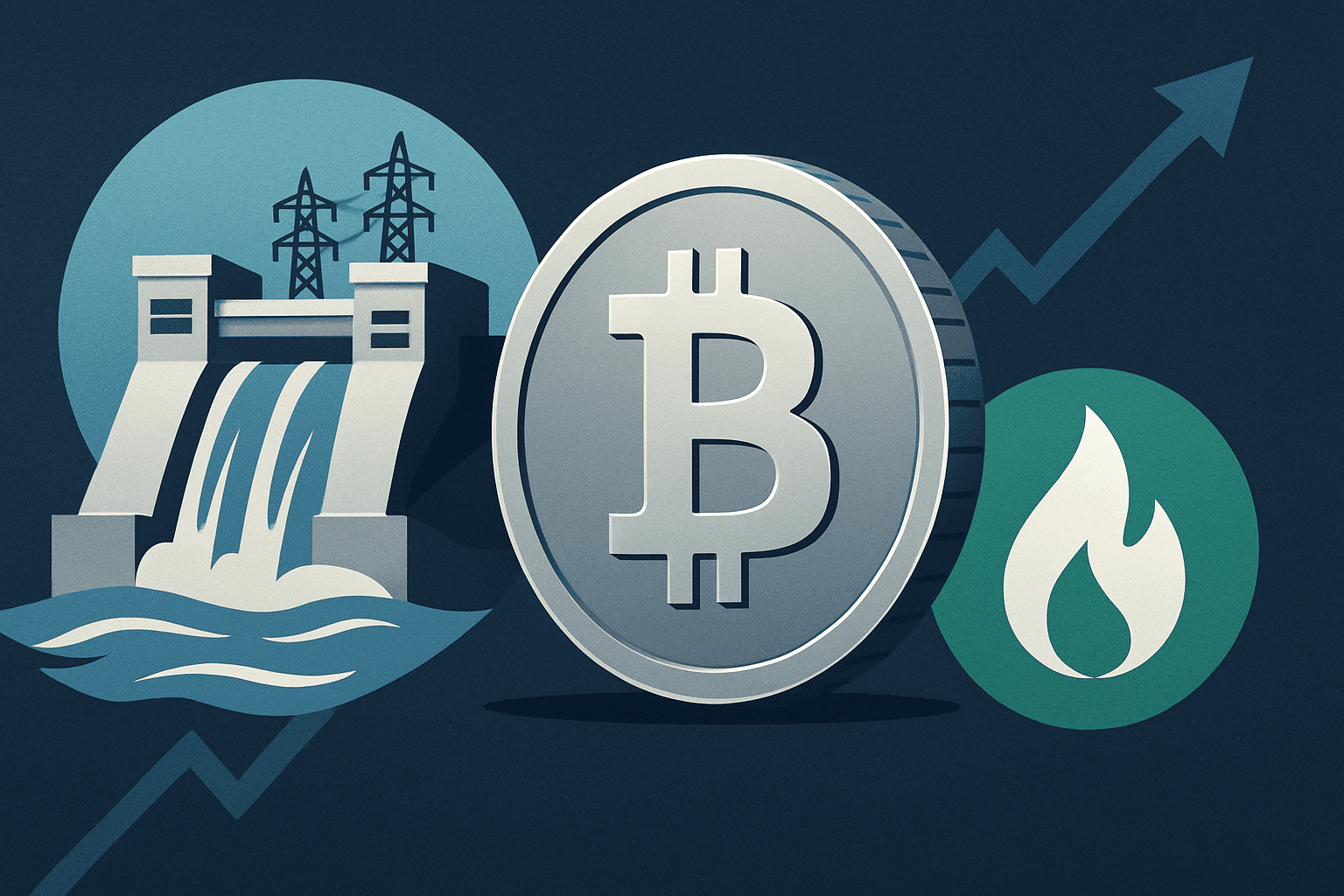
Cambridge says hydropower overtakes natural gas in Bitcoin mining energy mix
Preliminary Cambridge data indicates hydropower is now Bitcoin mining’s biggest power source, with low-carbon energy nearing 60% of the mix even as electricity use and emissions increased through December 2025.
Hydropower has become the largest energy source for Bitcoin mining, overtaking natural gas, while low-carbon energy now accounts for 59.4% of the sector’s reported power mix, according to preliminary data presented by Alexander Neumueller of the Cambridge Centre for Alternative Finance. The figures show Bitcoin mining’s annualized electricity consumption climbed 38% from 138 TWh in June 2024 to about 190 TWh in December 2025, while estimated greenhouse-gas emissions rose 20% from about 40 million to 48 million tonnes of CO2 equivalent. The findings suggest miners are using a cleaner power mix even as total electricity demand continues to grow, underscoring the balance between expanding network hashrate, hardware efficiency gains and the environmental footprint of securing the blockchain through mining. The survey also found limited current deployment of AI and accelerated computing services, with about 10% of respondents already allocating power to those activities and more than 40% of the rest actively exploring the option.
- Bitcoin mining: The computing-intensive process used to validate transactions and secure the network in exchange for rewards.
- Hydropower: Electricity generated from moving water, often treated as a low-carbon energy source.
- Hashrate: A measure of the total computing power being used to process and secure a proof-of-work network.