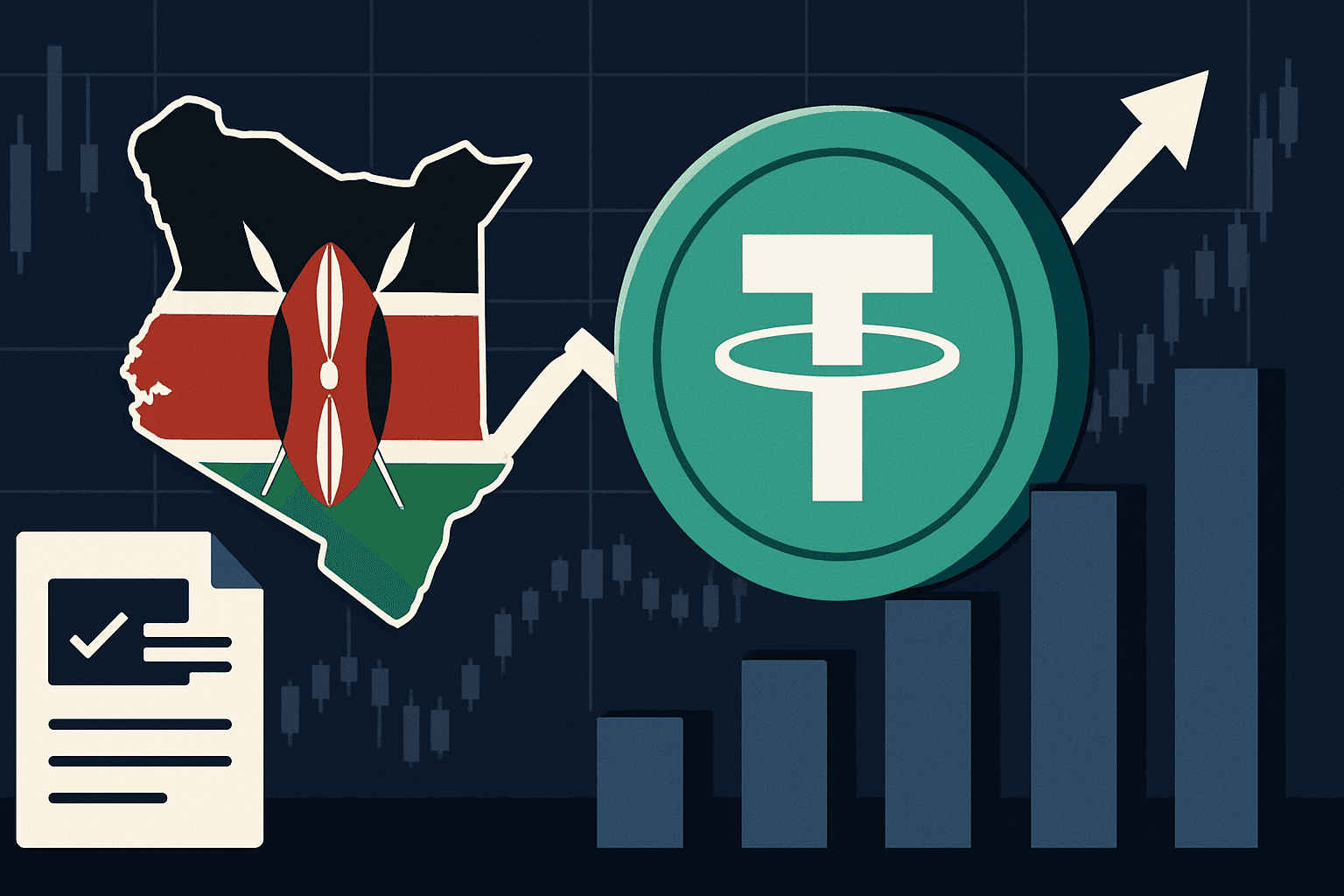
Tether signs Kenya NSE memorandum on crypto education and tokenization
The exploratory agreement covers tokenized securities, blockchain-based market infrastructure, digital asset education and a possible role for USDT and Tether’s Hadron platform in Kenya’s capital markets, subject to regulatory approval.
Tether and the Nairobi Securities Exchange signed a memorandum of understanding on July 28 to explore tokenized securities, blockchain-based market infrastructure, digital asset education and the possible use of USDT as a settlement layer in Kenya where regulations permit. The arrangement is explicitly exploratory and does not approve a tokenized security, launch a trading platform or commit the exchange to settling transactions in USDT. The proposed work centers on Hadron, Tether’s tokenization platform, and includes examining fractional access to securities for local and diaspora investors, instant and atomic settlement, and onboarding processes aligned with Kenyan anti-money-laundering and know-your-customer requirements. The parties also plan training sessions and workshops for NSE-listed brokers and retail investor groups. Kenya’s Virtual Asset Service Providers Act, which took effect on Nov. 4, 2025, places tokenization and token issuance platforms under the Capital Markets Authority while assigning stablecoin issuance oversight to the Central Bank of Kenya. Draft implementing regulations released by the National Treasury in March 2026 remain under review, meaning any eventual pilot would depend on regulatory classification and approvals. The initiative extends the NSE’s broader tokenization push after its 2025 work with DeFi Technologies, Valour and SovFi on the Kenya Digital Exchange. It also reflects Tether’s expansion beyond stablecoins into tokenized market infrastructure. RWA.xyz tracked about $36.9 billion in tokenized real-world assets excluding stablecoins as of July 27, while USDT’s market capitalization stood near $184 billion on July 29.
- tokenized securities: Traditional securities represented as digital tokens that can be issued, transferred or settled using blockchain-based systems.
- atomic settlement: A transaction method in which the exchange of assets and payment happens simultaneously, reducing the risk that one side fails to deliver.
- know-your-customer requirements: Verification procedures financial firms use to confirm customer identities and comply with anti-money-laundering rules.