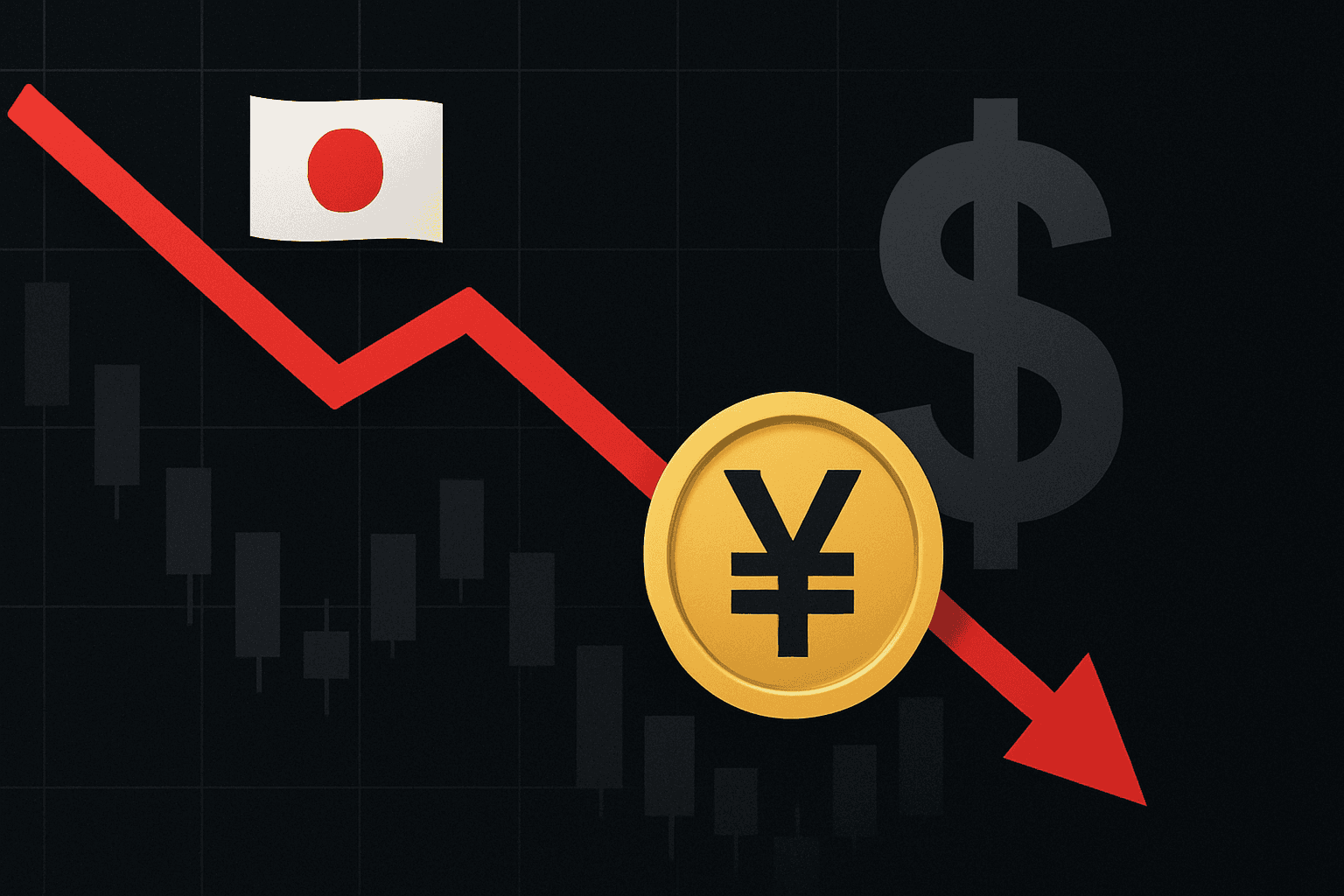
Yen surges on reported intervention as BOJ seen holding rates at 1%
Japan later confirmed yen-buying intervention after the currency's biggest one-day jump since 2023, but dollar-yen rebounded above 160 ahead of the BOJ decision and investors remain focused on whether rates rise to 1.25% by year-end.
The Japanese yen jumped sharply on July 30 after reports that Japan's government and the Bank of Japan bought yen and sold dollars, with multiple market sources also saying the New York Federal Reserve conducted a rate check, a step often viewed as a precursor to intervention. Dollar-yen, which had traded in the ¥163 range during Tokyo hours, fell about ¥6 to as low as ¥157.94 in European and U.S. trading, the yen's strongest level since mid-May, before rebounding and then moving back into the mid-¥158 range. Japan later confirmed it had carried out yen-buying intervention on Thursday, marking the currency's biggest single-day jump since 2023. The move proved short-lived, however, with the yen weakening again and USD/JPY climbing back above 160 on Friday ahead of the Bank of Japan's policy decision. The move was reinforced by broader dollar weakness after the Federal Reserve held rates steady and U.S. data pointed to cooling momentum. April-June real GDP rose an annualized 1.5%, below the 2.0% market forecast, while the June PCE price index slowed to 3.7% year-on-year from 4.1% and core PCE eased to 3.3% from 3.4%. The yen also strengthened broadly against other major currencies, briefly reaching ¥182.11 against the euro and rising sharply against sterling, as speculative short-yen positions were unwound. The stronger yen spilled into Japan's cryptocurrency market: by 9:10 a.m. on the 31st, Bitcoin traded in the upper ¥10.3 million range, or about $64,163.66, down 0.5% over 24 hours on domestic exchanges, while Ethereum traded in the upper ¥300,000 range, or about $1,868.84, down 1.4%, and XRP was in the lower ¥170 range, down 0.9%. Attention now turns to the BOJ's July 31 policy decision, where the bank is expected to keep its policy rate at 1.00% following the previous 0.25 percentage point hike. Traders are focused on the Outlook Report and Governor Kazuo Ueda's press conference for signals on whether the BOJ will maintain a positive stance toward additional rate hikes, with Reuters previously reporting that most economists expect the policy rate to reach 1.25% by year-end. Crypto traders are also watching whether Bitcoin can decisively clear the $65,000 level despite weaker yen-denominated pricing in Japan.
- rate check: An inquiry by authorities to banks on exchange-rate levels and market conditions, often seen as a possible precursor to currency intervention.
- currency intervention: Official buying or selling in foreign-exchange markets to influence a currency's value.
- Outlook Report: The Bank of Japan's published assessment of the economy and prices, closely watched for clues on future policy.