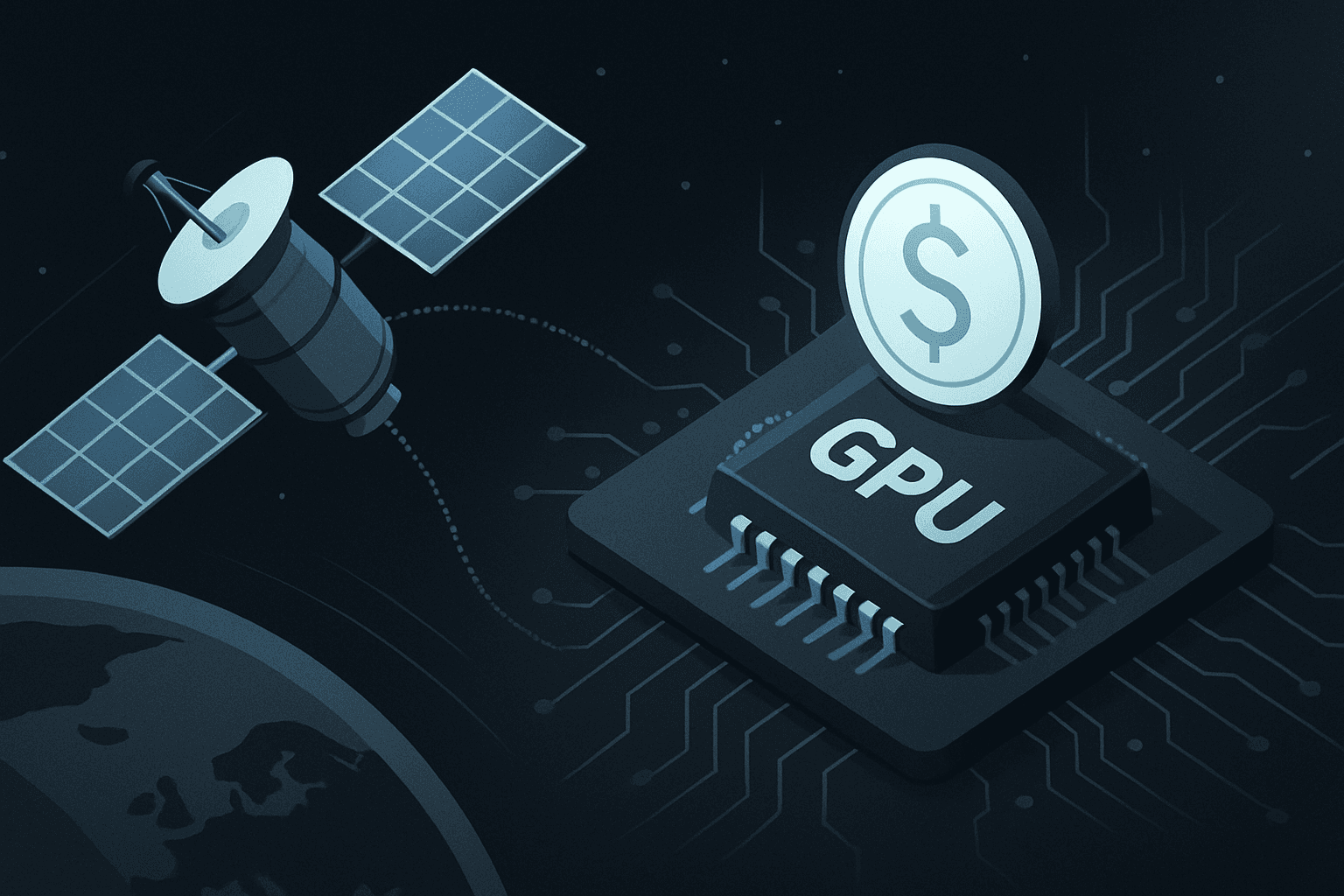
SpaceX partners with Nvidia on Starmind AI1 satellite compute payload
SpaceX and Nvidia said the Starmind AI1 satellite will use Nvidia's Vera Rubin NVL72 system in a low Earth orbit design aimed at scaling into a much larger orbital AI compute network.
SpaceX and Nvidia said on August 4, 2026 that they are jointly developing the compute payload for the Starmind AI1 satellite, a low Earth orbit spacecraft designed to run artificial intelligence workloads using Nvidia's Vera Rubin NVL72 system, which combines Rubin GPUs and Vera CPUs. The companies said the satellite is intended as more than a prototype payload, with Starmind positioned as the foundation for an orbital AI network that could eventually scale to as many as one million satellites. The new details expand the technical outline of the project. Each satellite is designed to deliver about 120 kilowatts of average compute power, with peaks of 150 kilowatts, and to stand 20 meters tall with a 70-meter solar wingspan to generate power in sun-synchronous orbit. Processed data would be sent back to Earth over Starlink's existing laser link network, allowing the system to use SpaceX's current communications backbone rather than requiring a separate ground network buildout. The companies are targeting initial prototype testing in early 2027 and mass production by late 2027. SpaceX has also sought Federal Communications Commission approval for a far larger deployment of orbital data center satellites at altitudes of 500 to 2,000 kilometers, though that regulatory process remains unresolved.
- Vera Rubin NVL72 system: Nvidia computing hardware that combines Rubin GPUs and Vera CPUs for demanding AI workloads.
- Sun-synchronous orbit: A type of orbit that keeps a spacecraft in consistent sunlight conditions, helping support steady solar power generation.
- Laser link network: An optical communications system that sends data between satellites at high bandwidth using lasers.