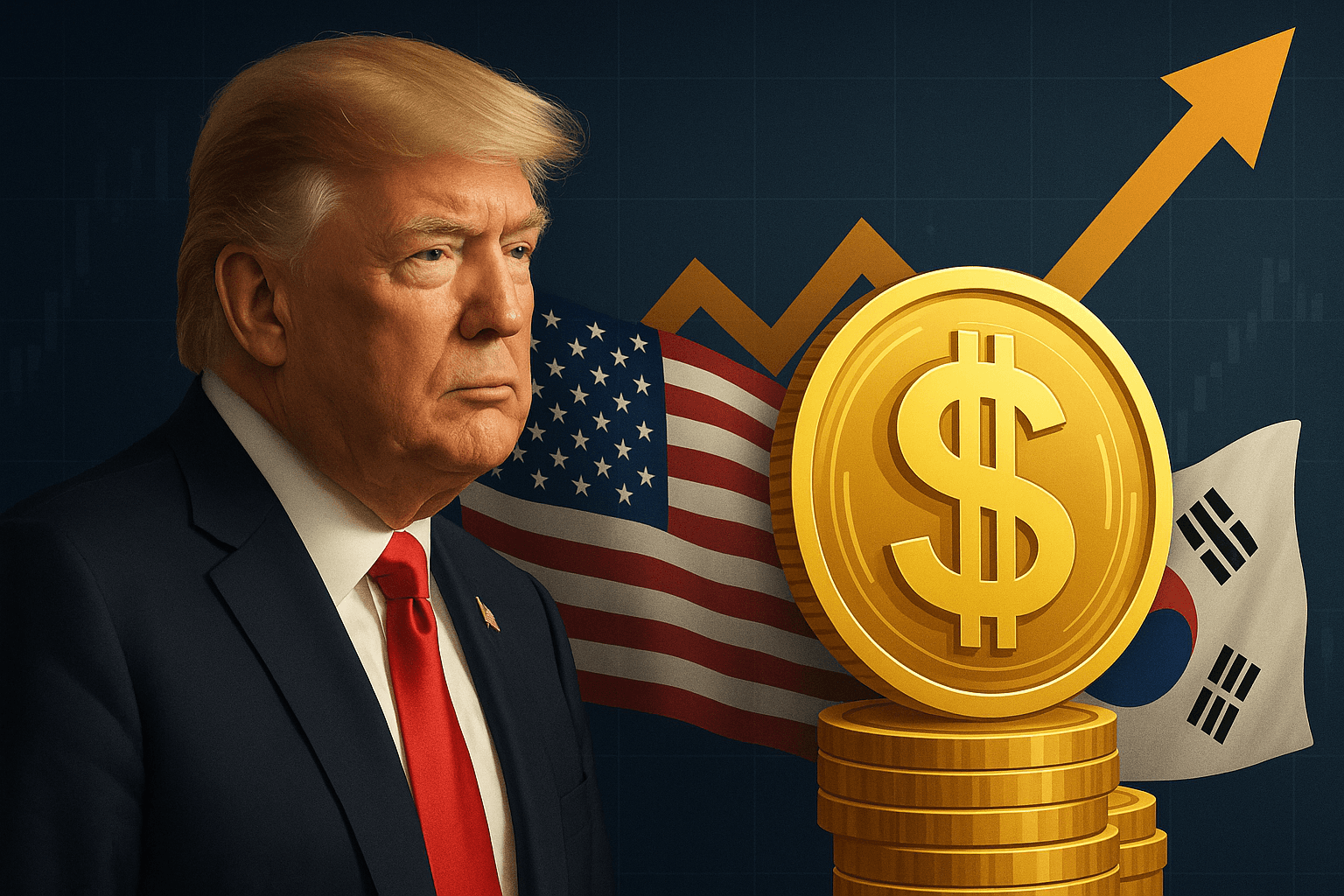
President Trump Claims South Korea to Pay $350 Billion to Reduce Tariffs
Trump states South Korea will increase U.S. oil and gas purchases and invest over $600 billion in the United States.
Fact Check
The assessment is "likely_true" with high confidence based on strong, consistent evidence from multiple high-authority sources. The core elements of the statement—an agreement between South Korea and the United States involving a $350 billion financial commitment in exchange for a tariff-related deal—are well-supported.The official web portal of the South Korean government directly links a 'tariff deal' discussion with a 'USD 350 billion investment.' Similarly, a document filed with the U.S. Supreme Court connects the Korea Free Trade Agreement with a '$350 billion in investment and $100 billion in energy purchases.' These official sources confirm the existence of a quid pro quo arrangement involving this specific monetary figure and trade/tariff policy.The only ambiguity lies in the word "pay." The most credible sources characterize the $350 billion as an "investment" and "purchases," not a direct cash transfer from one government to the other. This implies commitments from South Korean companies to invest in the U.S. economy. While "pay" is an imprecise term for this type of economic statecraft, it captures the essence of the transaction: a financial commitment was made to secure a trade benefit. The statement is substantially correct in its claim of a major financial exchange for a trade concession. Lower-authority sources also use the language of a "demand" to "pay," showing this interpretation exists in public discourse. The evidence overwhelmingly supports the central claim, making the statement very likely to be true, despite the slight imprecision in terminology.
Summary
No Summary provided as the original text is short
Terms & Concepts
- Tariffs: Taxes imposed on imported goods and services, often used to protect domestic industries or as a trade negotiation tool.
- Investment: The allocation of capital or resources in order to generate returns or achieve strategic economic objectives.
- Oil and Gas Imports: The purchase and transportation of crude oil and natural gas from foreign producers into another country for consumption or refining.