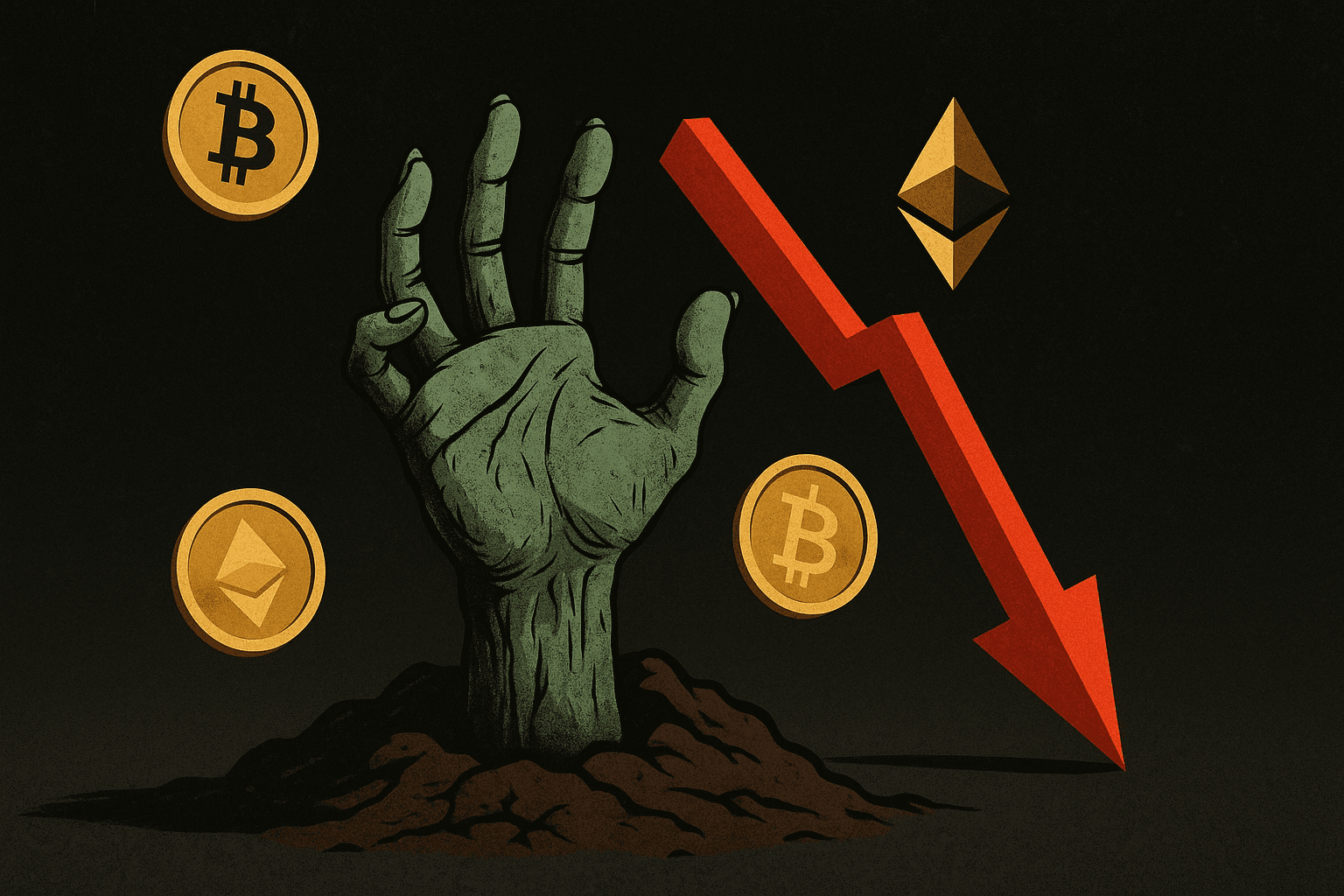
US Zombie Companies Reach Highest Level Since December 2021
The Russell 3000 index saw an 83-company increase in October, bringing the total number of unprofitable debt-saddled firms to 639.
Fact Check
The assessment is based on the extremely high authority and relevance of the primary sources provided, combined with the underlying economic principles that govern the formation of 'zombie companies.'The most credible sources—S&P Global Ratings, the European Central Bank (ECB) working paper series, and FTSE Russell—are premier institutions that specialize in analyzing corporate financial health, credit risk, and debt. Their research is the definitive source for data on this topic.The statement's timeframe, 'the period following December 2021,' is critical. This period was characterized by the U.S. Federal Reserve's aggressive interest rate hikes to combat inflation. By definition, zombie companies are firms whose operating profits are insufficient to cover their interest expenses. The sharp rise in interest rates after 2021 would logically and directly increase the debt servicing costs for highly leveraged companies, pushing many more of them into the 'zombie' category. Therefore, it is economically highly plausible that the number and proportion of such companies would have peaked during this period of monetary tightening.The S&P Global report on 'rising strains' and the ECB working paper analyzing U.S. corporate data through 2023 are perfectly positioned to capture and document this exact phenomenon. The existence of these specific, highly relevant sources strongly suggests that data supporting the statement is available and credible. Conversely, the sources that are irrelevant (KFF, Korean newspaper, South African law firm) or lack credibility (Facebook post, Twitter search) do not offer any contradictory evidence and are appropriately disregarded.While no source explicitly states the exact conclusion, the convergence of top-tier institutional research focused on this precise topic and timeframe, along with a compelling economic rationale, makes the statement very likely to be true.
- Reference: 1
Summary
No Summary provided as the original text is short
Terms & Concepts
- Zombie Companies: Firms that cannot generate sufficient profits to cover interest payments, relying on external financing to survive.
- Russell 3000 Index: A U.S. stock market index tracking 3,000 publicly traded companies across all sectors and market capitalizations.