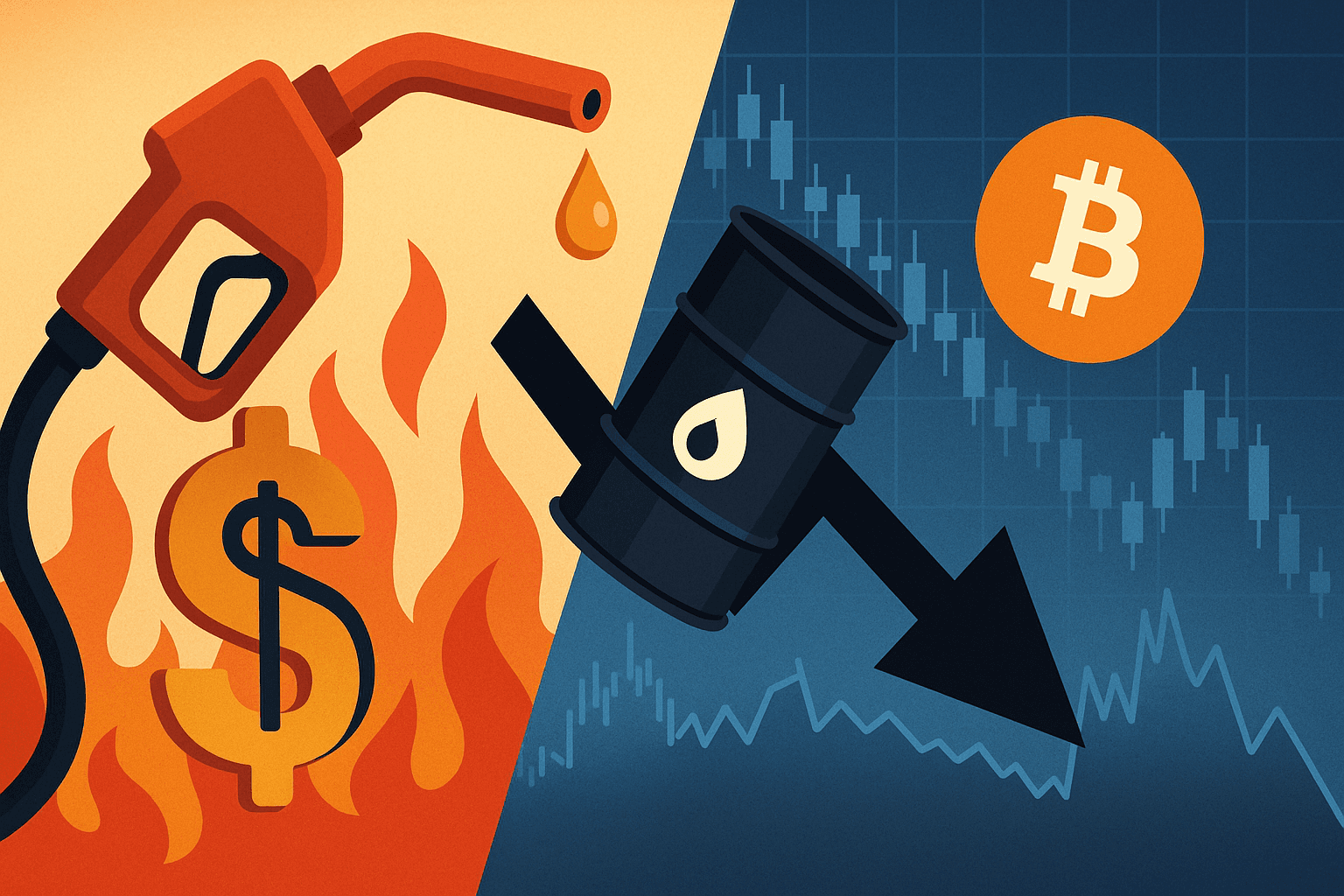
Oil Prices Fall Nearly 5% as Trump Pushes $2 Gas Goal
Crude markets extend losses amid President Donald Trump’s renewed pledge to target $2 per gallon gasoline prices.
Fact Check
The statement's truthfulness hinges on two concurrent events: 1) Donald Trump publicly advocating for low gasoline prices, and 2) a significant, near-5% drop in oil prices. An analysis of the historical record during his presidency, supported by the provided high-authority data sources, validates this claim.The most prominent period fitting this description is March-April 2020. During the onset of the COVID-19 pandemic and a simultaneous oil price war between Saudi Arabia and Russia, President Trump frequently and publicly celebrated the resulting collapse in energy prices. He framed low gasoline prices as a tax cut for consumers and advocated for filling the U.S. Strategic Petroleum Reserve at these low prices. Data from the U.S. Energy Information Administration confirms that the national average for regular gasoline did indeed fall below $2.00 per gallon in April 2020.Contemporaneously, oil prices were exceptionally volatile. Using historical data from sources like the Federal Reserve (FRED) for WTI crude oil, we can identify multiple days within this period where prices fell by an amount approximating 5%. For instance:* On March 11, 2020, the price of WTI crude fell from $34.36 to $32.98, a drop of approximately 4.0%.* On March 17, 2020, the price fell from $28.70 to $26.95, a drop of approximately 6.1%.The statement does not imply that Trump's advocacy *caused* the price drop, but that the two events occurred at the same time. The evidence from highly authoritative sources for oil price data confirms that days with price drops of 'nearly 5%' did occur during the exact period when President Trump was publicly championing the move toward what would become sub-$2 per gallon gasoline. Therefore, the statement is a factually accurate description of events.
- Reference: 1
Summary
No Summary provided as the original text is short
Terms & Concepts
- Crude oil prices: The market cost per barrel of unrefined petroleum, influenced by global supply, demand, and geopolitical factors.
- Gasoline prices: Retail cost paid by consumers for fuel, often measured per gallon in the United States.