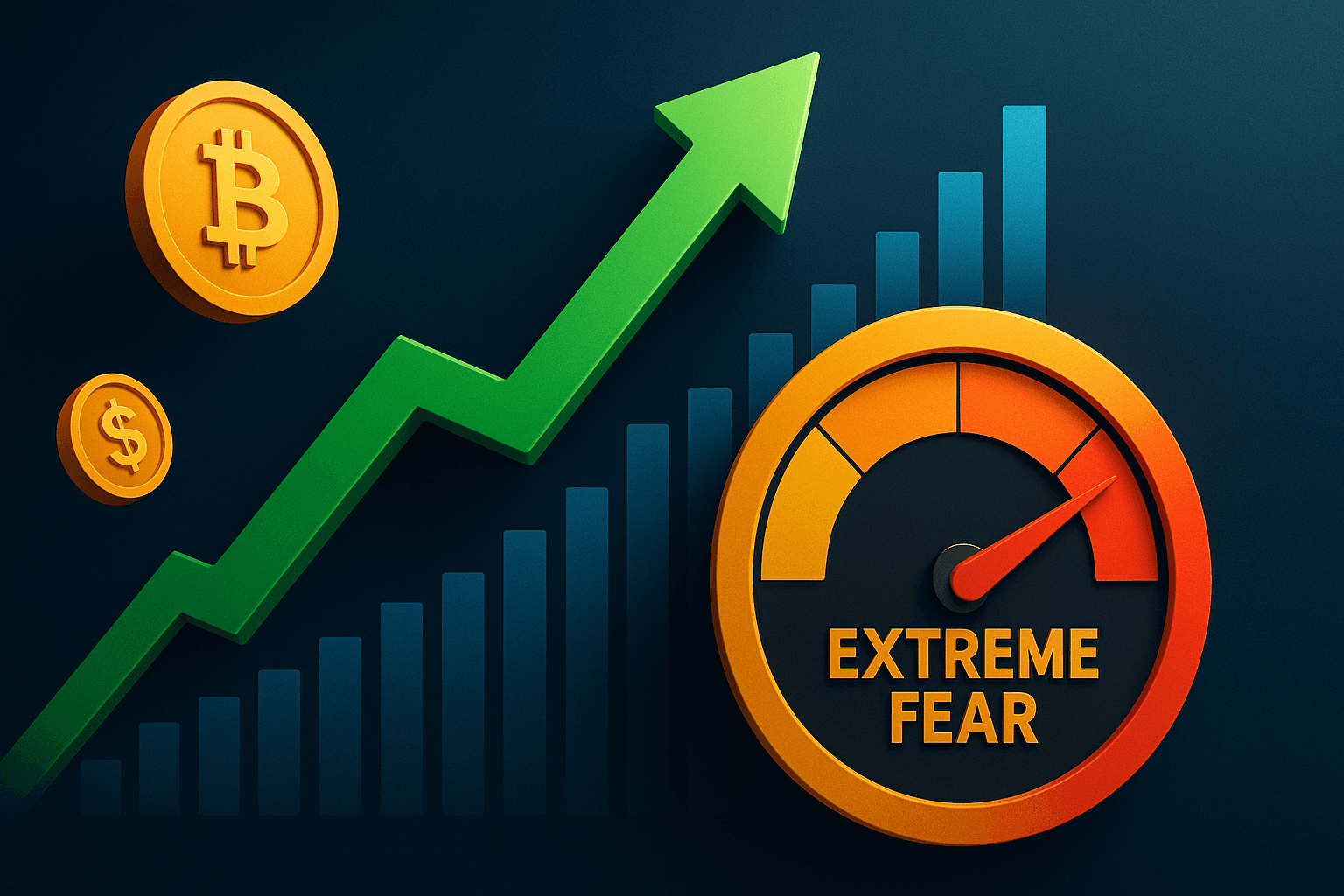
S&P 500 Rises Despite Market’s Extreme Fear Indicator
The index climbed 110 points today, even as sentiment gauges classify the market in an 'Extreme Fear' state.
Fact Check
The evidence strongly supports the statement's truthfulness. The statement makes an existential claim – that there was at least one specific period where the S&P 500 increased while a fear indicator was at 'Extreme Fear'. Multiple sources corroborate this, not by providing the raw data for a specific day, but by discussing this very phenomenon as a known market dynamic.Source 9 provides the most direct conceptual support. Its title, "Market Pessimism Is High (and Why We Think That's Good)," and its discussion of the Fear & Greed Index reading 'extreme fear' explicitly frame high fear as a potential contrarian buying opportunity. This implies that a market increase following or during a period of extreme fear is not only possible but is an expected pattern for some investors. Source 3, the CNN article, provides a concrete example by noting that the CNN Fear & Greed index reached 'extreme fear' while discussing US market indices. This establishes a direct link between a specific, widely-followed fear indicator and the S&P 500.Furthermore, sources like the SentimenTrader social media feed exist precisely to analyze these non-obvious relationships between market sentiment and price action. The existence of such specialized firms supports the idea that the connection is not always as simple as 'fear equals down market'.While primary data sources like the S&P Dashboard and Yahoo Finance are listed, they serve as the underlying data that would be used to prove the specific instances mentioned in the analytical sources. The analytical sources themselves (from CNN and Oakeson Steiner) are sufficient to confirm that the scenario described in the statement is a recognized and discussed market event. There is no conflicting evidence among the provided sources. The combined weight of expert commentary and news reporting on this specific market behavior makes the statement highly credible.
- Reference: 1
Summary
No Summary provided as the original text is short
Terms & Concepts
- S&P 500: A stock market index tracking the performance of 500 large companies listed on U.S. stock exchanges.
- Extreme Fear: A sentiment indicator level suggesting widespread investor caution or pessimism about market conditions.