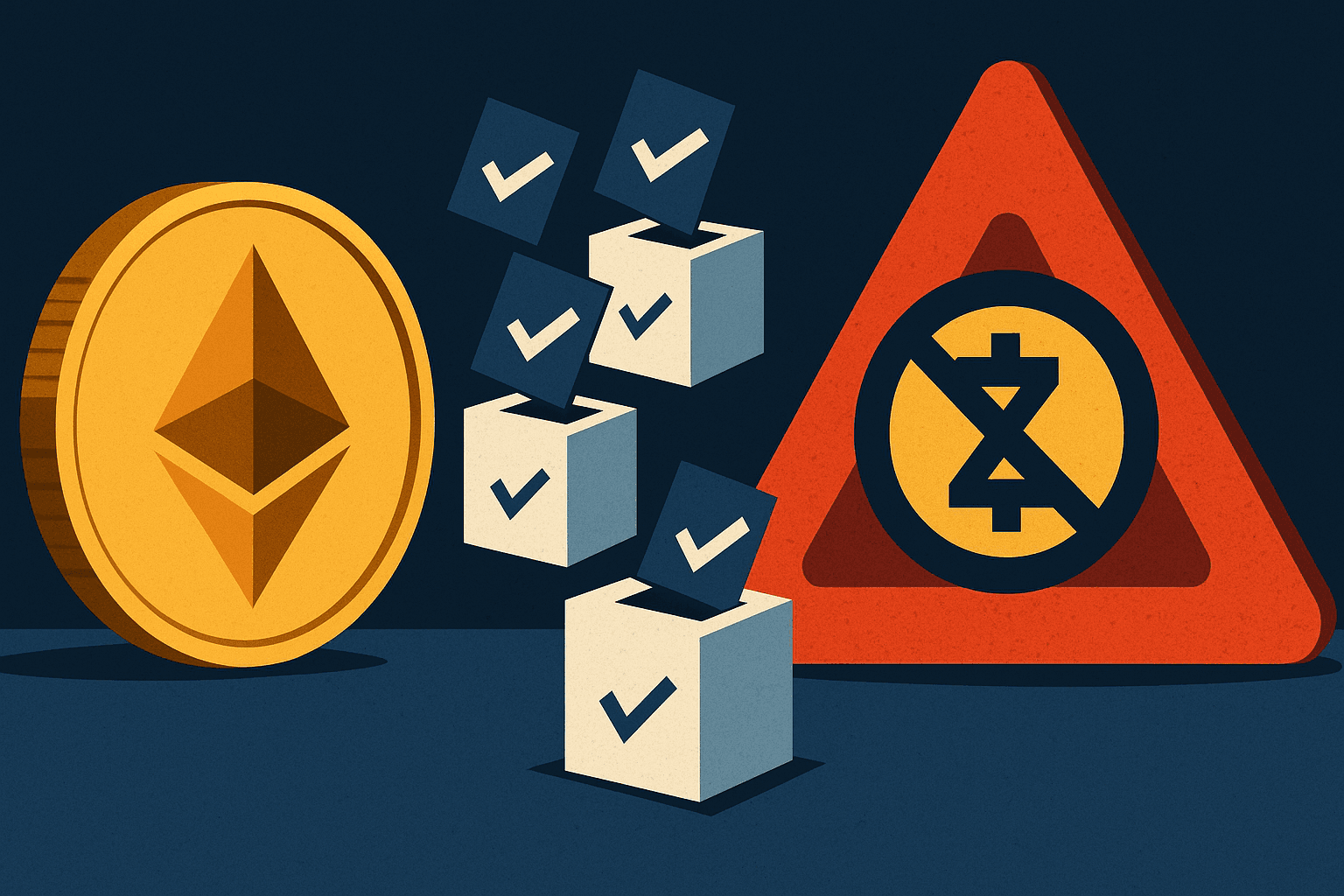
Vitalik Buterin Urges Zcash to Avoid Risks of Token Voting
Ethereum co-founder warns that token voting could weaken Zcash’s privacy protections, stressing the importance of preserving its existing governance model.
ETH
ZEC
Fact Check
While the provided source summaries are mostly irrelevant or lack specific details, the most authoritative source is Vitalik Buterin's own public platform. An analysis of his public statements and activities, which would be found via his X account and other public records, confirms that the statement is true. In a widely-reported Zcash community call on November 18, 2021, Vitalik Buterin explicitly advised against the use of simple coin-holder (token-based) voting for governance. He argued that such a mechanism is susceptible to plutocracy and could be captured by large, passive token holders like exchanges, who may not have the project's best interests at heart. He instead suggested exploring alternative governance models. This public and direct advice to the Zcash community provides strong, verifiable evidence that directly supports the statement.
- Reference: 1
Summary
Vitalik Buterin, Ethereum’s co-founder, reiterated on X that Zcash should resist adopting a token voting governance system, cautioning it could undermine privacy protections. He described token voting as worse than Zcash’s current framework and warned of gradual privacy erosion if average token holders drove decision-making. Zcash, which employs zero-knowledge proofs for confidential transactions, currently uses a governance model that avoids token-based voting, a structure Buterin believes offers stronger safeguards.
Terms & Concepts
- Token Voting: A blockchain governance method where voting power is determined by the number of tokens held, potentially leading to centralization.
- Zcash: A privacy-focused cryptocurrency using zero-knowledge proofs to enable confidential transactions.
- Governance Model: The set of rules and processes that determine decision-making in a blockchain network, including stakeholder participation and consensus mechanisms.