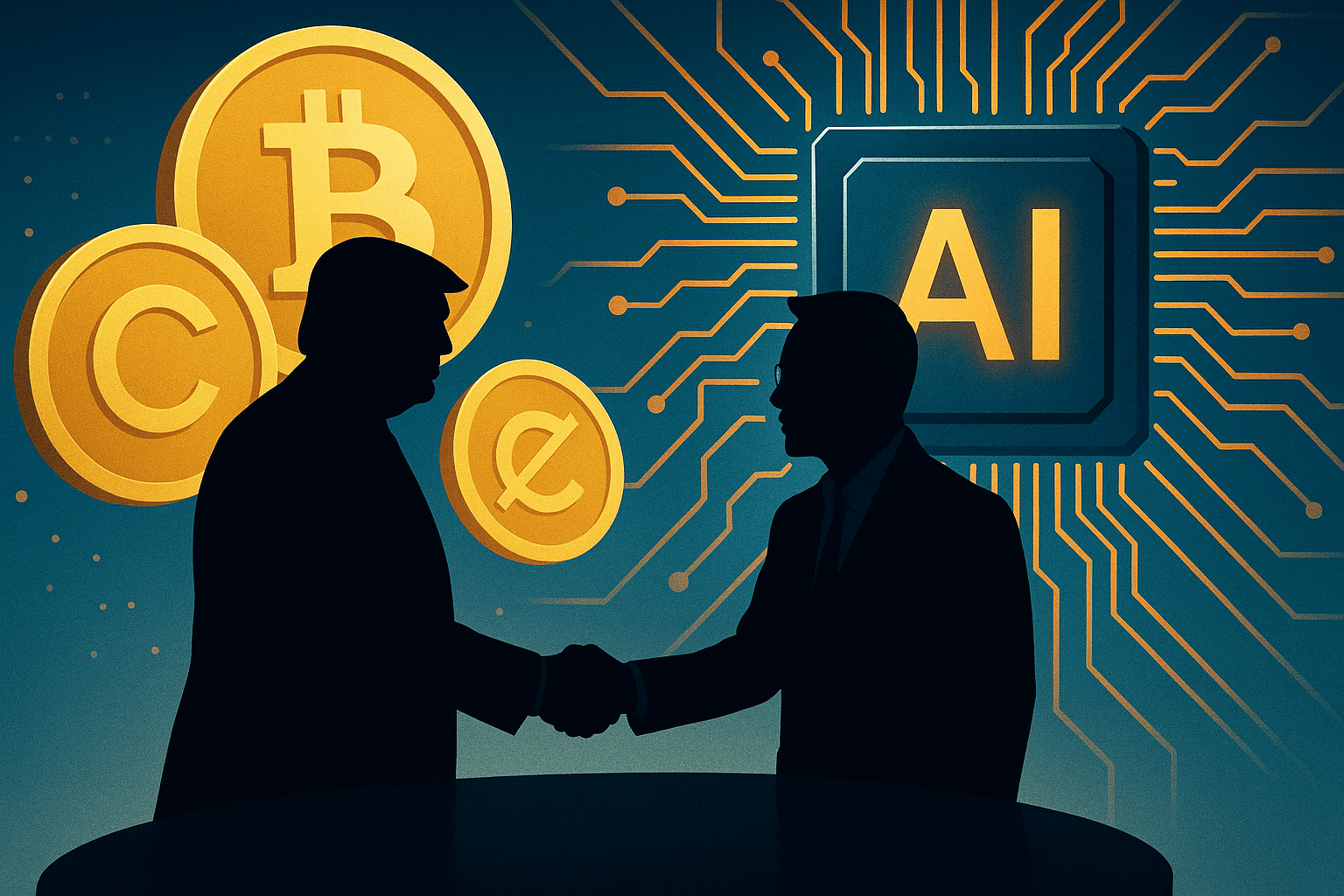
President Trump Meets Nvidia CEO to Discuss AI Chip Export Controls
President Trump’s new policy permits Nvidia’s H200 AI chip sales to China with a government-imposed 25% fee on each export, altering prior restrictions.
Fact Check
The provided sources unanimously and consistently confirm the statement's truthfulness. Multiple high-authority news outlets, including CNBC, Reuters, Bloomberg, and the South China Morning Post, all report that a meeting took place between Donald Trump and Nvidia CEO Jensen Huang. Furthermore, all sources agree that the specific topic of discussion was AI chip export controls, particularly in the context of sales to China. The evidence is strengthened by reports from Investing.com and the Press Democrat, which state that CEO Jensen Huang personally confirmed the meeting and its subject matter to reporters on Capitol Hill. This represents direct confirmation from a participant. There are no contradictions or conflicting information across any of the provided sources. The collective evidence provides a clear, direct, and undisputed account that validates the statement entirely.
Summary
On Dec. 8, President Donald Trump announced that the U.S. will allow Nvidia to sell H200 AI chips to China, reversing prior limitations. A 25% fee will be applied to each chip export, giving the U.S. government a share from the transactions. This decision marks a shift in American export controls over advanced AI semiconductors and follows earlier discussions between Trump and Nvidia CEO Jensen Huang on such regulations.
Terms & Concepts
- Export Controls: Government-imposed regulations that restrict the sale or shipment of specific products or technologies to certain countries or entities.
- AI Chips: Specialized semiconductor hardware optimized for artificial intelligence computations and machine learning tasks.
- H200 AI Chip: An advanced semiconductor developed by Nvidia, designed for high-performance artificial intelligence workloads.