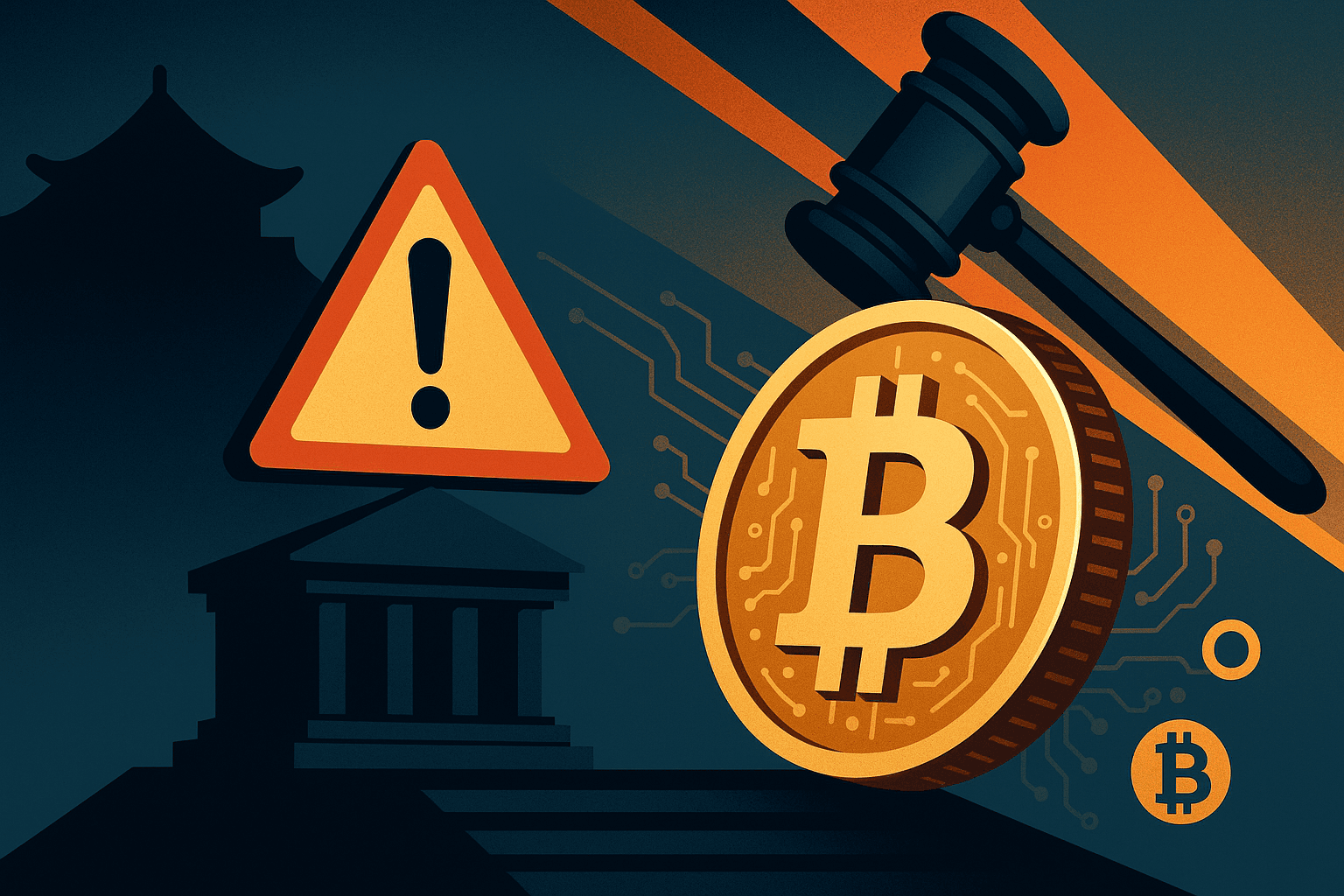
China Securities Regulatory Commission Warns Against High-Risk Crypto Operations
Wu Qing urges securities firms to strengthen governance, manage conflicts of interest, and avoid unregulated crypto activities to safeguard financial stability.
Fact Check
The evidence from multiple highly authoritative and relevant sources consistently supports the statement. Two separate reports from the South China Morning Post, a highly credible source, explicitly state that the China Securities Regulatory Commission (CSRC) was a key participant in issuing recent warnings. One warning concerned the resurgence of speculative activities in virtual currencies, while another, issued jointly with six other industry bodies, targeted the risks of Real-World Asset (RWA) tokenization, a specific high-risk crypto operation. This is further corroborated by reports from Markets.com and industry-focused outlets like panewslab.com, which also identify the CSRC as being involved in risk warnings and regulatory guidance concerning stablecoins and illegal fundraising activities disguised as cryptocurrency operations. The sources with low relevance or very low authority do not provide any contradictory information. The consistent reporting across several reliable and independent sources provides a strong and cohesive body of evidence confirming the CSRC's role in warning about high-risk cryptocurrency operations.
Summary
China Securities Regulatory Commission Chair Wu Qing urged securities firms to improve governance, manage conflicts of interest, and provide fair trading services. He stressed risk prevention in areas such as margin financing, OTC derivatives, and private funds, and advised caution with crypto assets, steering clear of ventures that are unclear, unregulated, or beyond management capacity.
Terms & Concepts
- China Securities Regulatory Commission (CSRC): The primary securities regulator in China, overseeing markets and ensuring compliance with financial laws.
- Crypto assets: Digital assets such as cryptocurrencies that use cryptography for secure transactions and ownership verification.
- OTC derivatives: Financial contracts traded directly between parties, rather than through an exchange, often used for hedging or speculation.