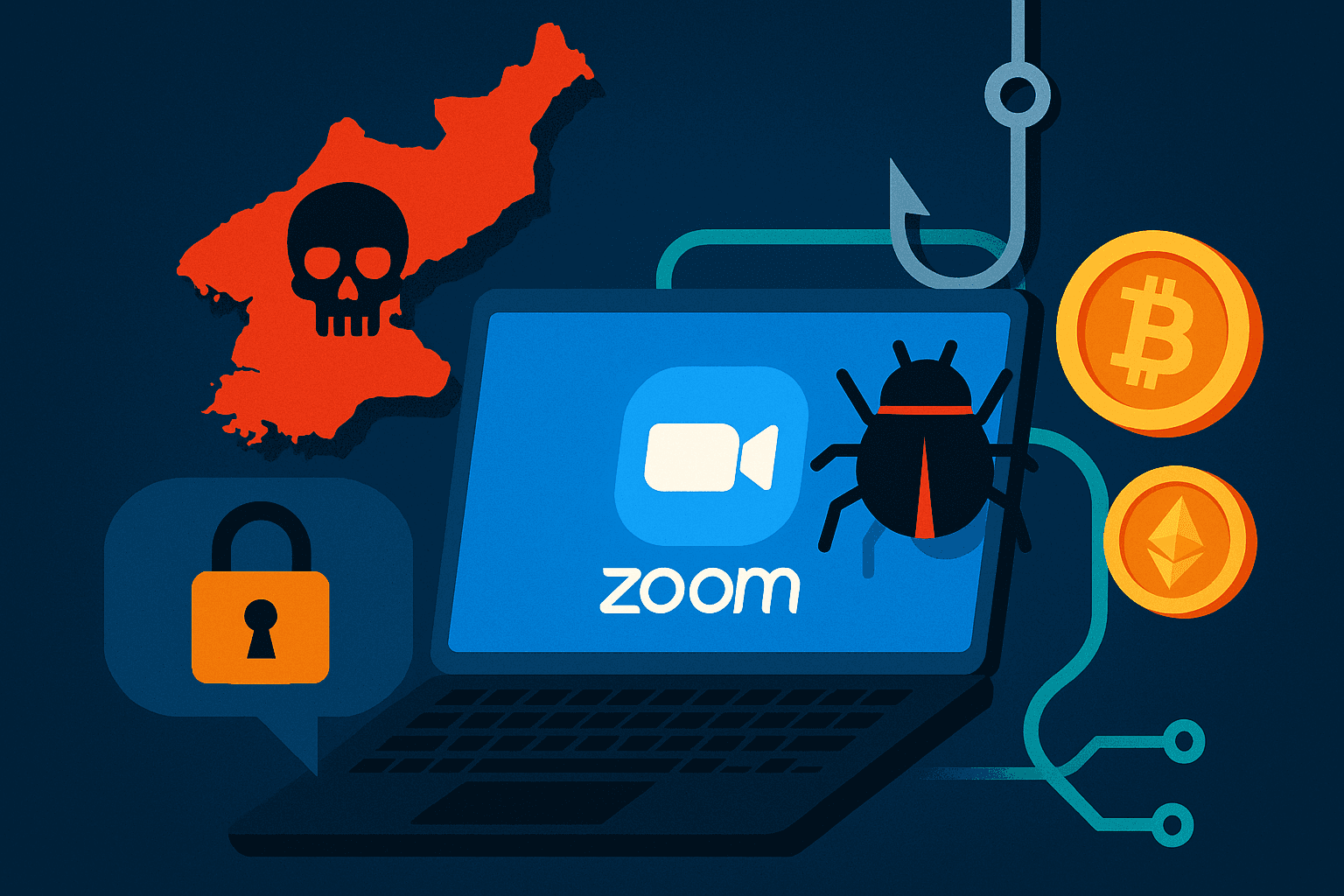
Security Alliance Warns of $300M Losses from North Korean Zoom Malware Scams
Security Alliance details a $300 million theft involving Telegram impersonation, fake Zoom calls, and RAT malware to seize cryptocurrency from victims.
Fact Check
The assessment is "likely_true" with high confidence based on strong corroborating evidence from multiple sources. A high-authority primary source, a social media post from a co-founder of the Security Alliance (SEAL), directly confirms the core components of the statement: the organization (SEAL), the perpetrators (North Korean actors), and the method (malware involving 'Fake Zoom' tactics). This establishes a solid foundation for the claim's credibility.The specific financial figure of $300 million is not mentioned in the primary source, but it is consistently reported across several other relevant, albeit lower-authority, secondary and tertiary sources. These sources, including a dedicated news article from BitDegree, all explicitly attribute the $300 million loss figure to the Security Alliance. While these sources have lower authority scores, their perfect relevance and consistency on this key detail provide strong support. There is no conflicting evidence among the provided sources; no source disputes the figure or the attribution. The most logical conclusion is that the Security Alliance released this information, which was confirmed in part by its co-founder on social media and reported in full by news outlets.
Summary
Security Alliance (SEAL) revealed North Korean hackers stole over $300 million in a social engineering campaign involving hijacked Telegram accounts, fake Zoom meetings, and remote access Trojan (RAT) malware. Victims were contacted via impersonated accounts, directed to join fraudulent calls, and prompted to download malicious patches that enabled hackers to access crypto wallets and steal digital assets.
Terms & Concepts
- Malware: Malicious software designed to damage, disrupt, or gain unauthorized access to systems.
- Crypto keys: Private cryptographic keys used to access or transfer cryptocurrency holdings.
- Remote Access Trojan (RAT): A type of malware that allows attackers to remotely control an infected computer, often used for data theft or espionage.