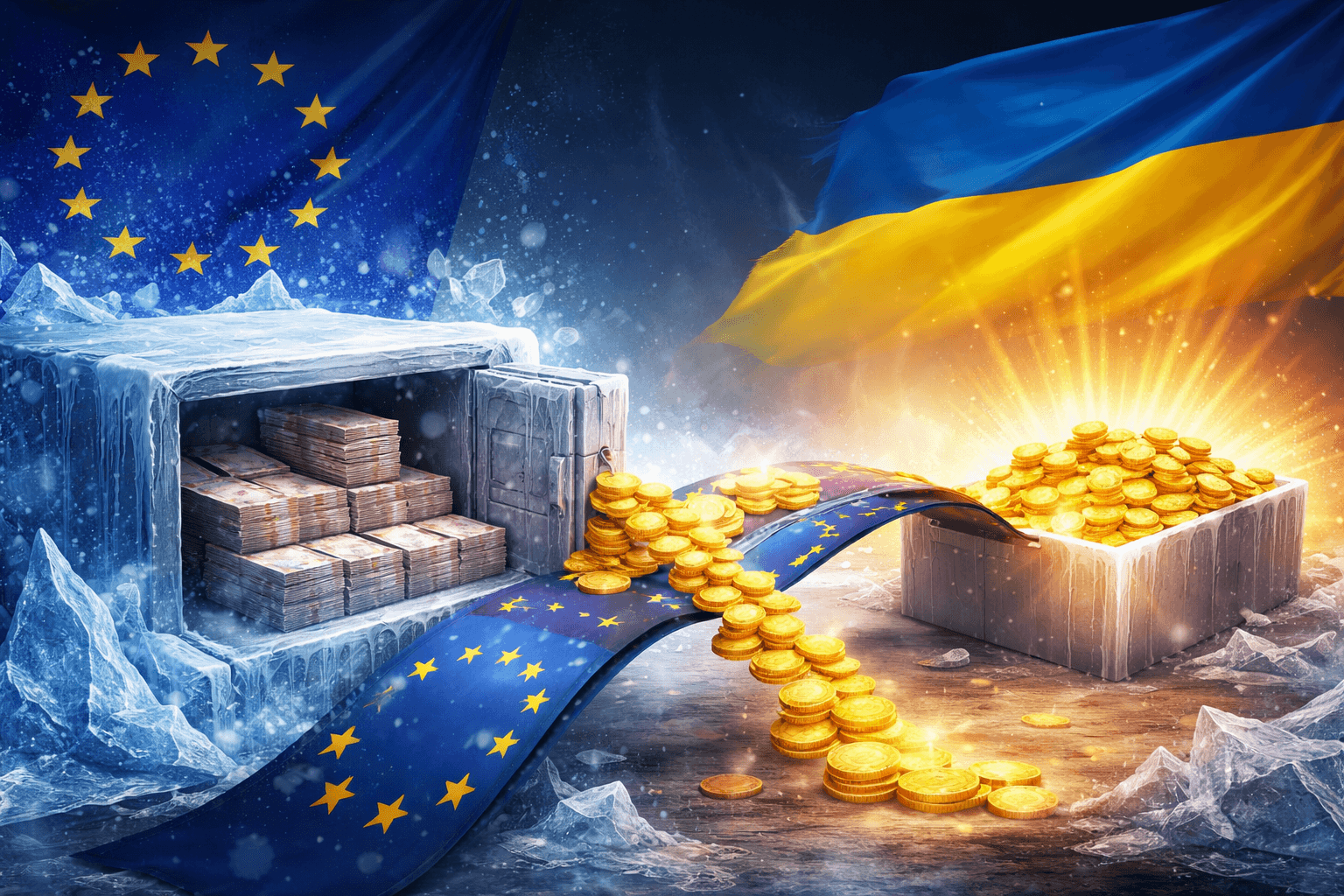
EU Considers Using Frozen Russian Assets for Ukraine Loans
European Union leaders are debating a plan to channel frozen Russian funds into loans aimed at supporting Ukraine's financial needs.
Fact Check
The evidence from all provided sources overwhelmingly supports the truthfulness of the statement. Multiple high-authority sources, including a global think tank (IISS), and major news organizations (The Guardian, Associated Press), explicitly discuss a specific "plan," "proposal," or ongoing "negotiations" within the EU. The Associated Press report is particularly direct, detailing diplomatic efforts by envoys to finalize a plan to use the assets as collateral for a loan. This indicates the matter is well beyond preliminary consideration and is in an active, advanced stage of policy discussion. Further corroboration comes from a primary source, the Ukrainian government, whose Prime Minister is quoted discussing frozen Russian assets as a component of international support. An academic analysis from The Conversation also breaks down the mechanics and risks of "the EU's plan," treating its existence as a given. Even the source reporting on opposition to the proposal (Hungarian Conservative) confirms the statement's core truth; the existence of a coalition to oppose the plan necessitates that there is a concrete plan to oppose. There are no contradictions among the sources regarding the existence of these considerations; they are all consistent in reporting that the EU is actively grappling with this policy option.
- Reference: 1
Summary
No Summary provided as the original text is short
Terms & Concepts
- Frozen Assets: Financial holdings restricted from use, often due to sanctions or legal orders.
- European Union (EU): A political and economic union of 27 European countries promoting integration and policy coordination.