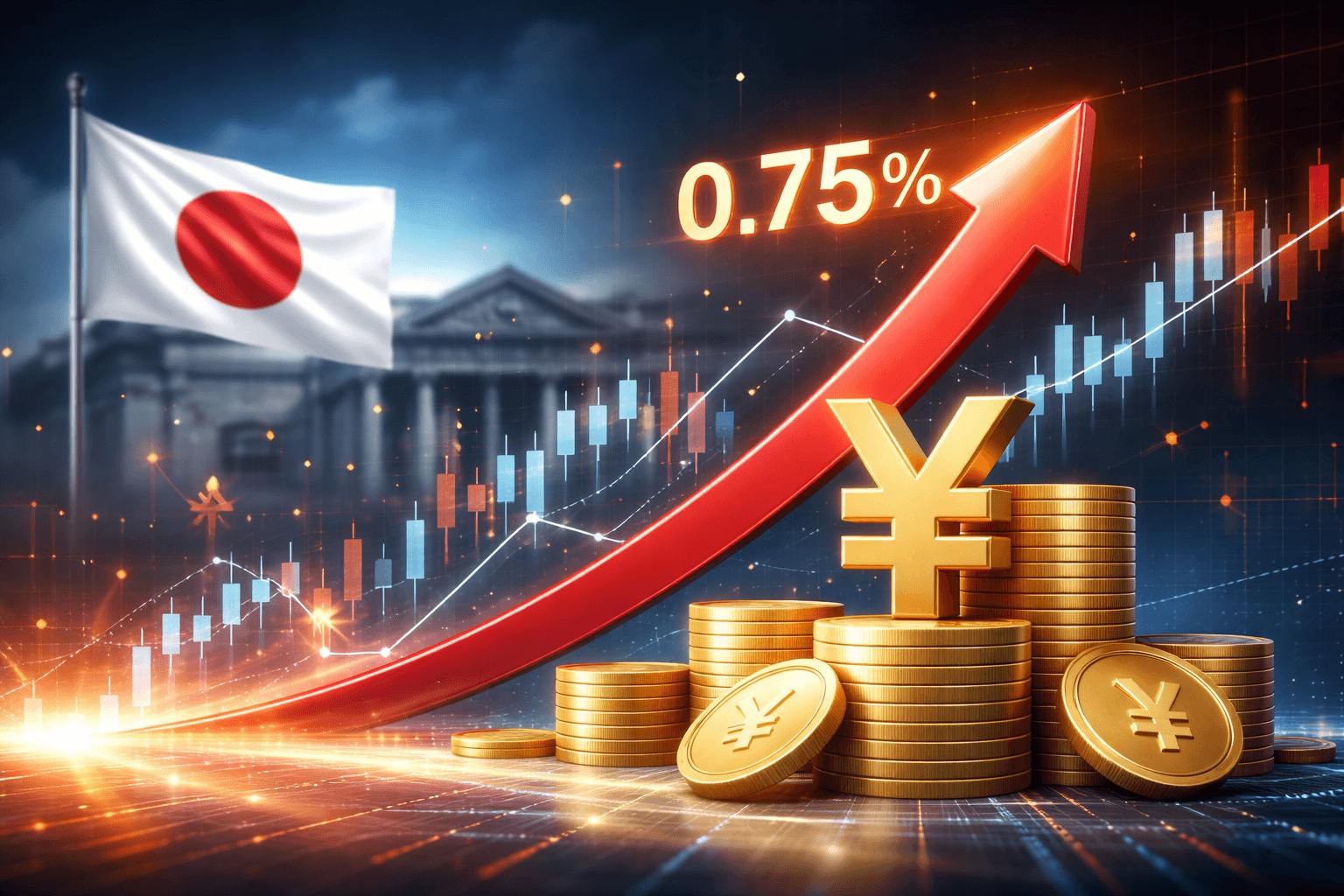
Bank of Japan Raises Interest Rate to 0.75%, Highest Since 1995
BOJ Governor Kazuo Ueda signals further rate hikes, emphasizing that economic and price trends will guide future decisions on policy adjustments.
Fact Check
The statement is strongly supported by multiple, independent, high-authority sources. There are three key claims in the statement: 1) The Bank of Japan (BOJ) raised its interest rate, 2) the new rate is 0.75%, and 3) this is the highest level since 1995. Multiple sources, including The New York Times, Bloomberg, CNBC, and the BBC, explicitly confirm that the BOJ raised its interest rate to the highest level in 30 years, which is consistent with the "since 1995" timeframe given the 2025 article dates. This corroborates claims 1 and 3. The most specific part of the statement, the 0.75% figure, is explicitly confirmed by The New York Times, a highly credible source. While the other summaries do not mention this specific number, none of them contradict it. The consistency across all relevant and authoritative sources on the general facts of the rate hike and its historical significance lends high credibility to the specific details provided by one of those sources.Irrelevant sources, such as the data on the Bank of Jamaica and IMF government expenditure, were correctly disregarded. The remaining evidence is consistent, comes from top-tier financial news organizations, and directly supports all parts of the user's statement.
Summary
Bank of Japan Governor Kazuo Ueda stated that the central bank will continue raising benchmark rates if the economic outlook materializes. The BOJ's recent hike to 0.75% marks the highest rate since 1995, emphasizing its ongoing shift from ultra-low rates. Ueda's comments came at a meeting on January 5, 2026.
Terms & Concepts
- Rate Hike: An increase in a central bank's benchmark interest rate, used to control inflation or stabilize currency values.
- Bank of Japan (BOJ): The central bank of Japan, responsible for issuing currency, setting monetary policy, and maintaining financial stability.