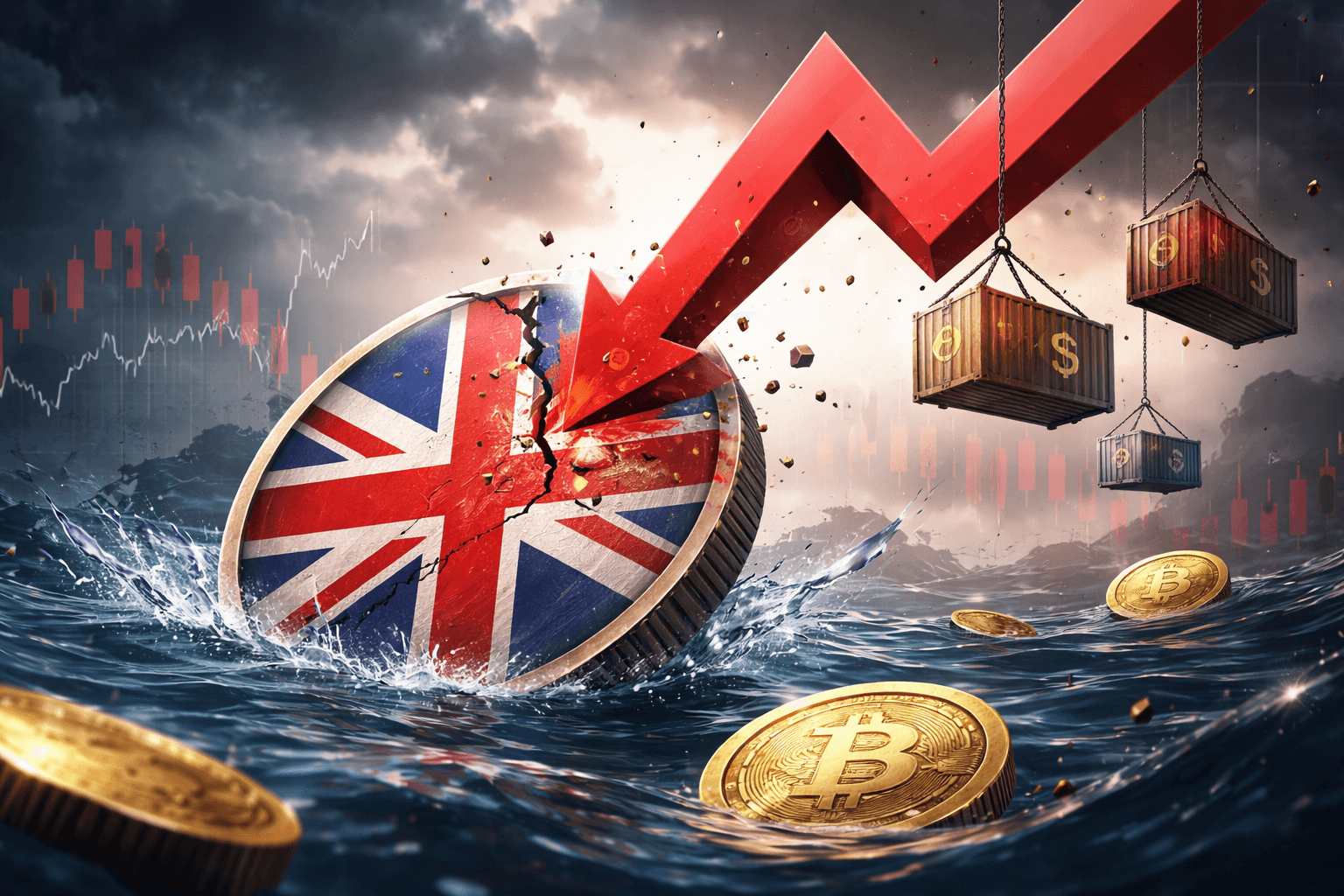
UK Faces Recession Risk Amid President Trump’s Tariffs
The Telegraph reports that tariffs imposed by U.S. President Donald Trump could push the United Kingdom toward a potential economic downturn.
Fact Check
The evidence from the provided high-authority sources strongly and consistently supports the statement that tariffs implemented by the Trump administration contributed to an increased risk of recession in the United Kingdom. 1. **Official Recognition of Risk:** The UK's central economic authorities perceived the tariffs as a significant threat. Sources like Central Banking, which reports directly on the Bank of England (BoE), and Reuters, referencing the BoE's Financial Stability Report, indicate that the institution officially identified US tariff policy and the resulting global trade tensions as a key risk to the UK economy. Commentary linked to UK bond yields also explicitly connects "tariff risks" to BoE policy considerations, showing the risk was a factor in monetary policy.2. **Expert Economic Analysis:** Leading independent and financial institutions corroborated this risk assessment. The Peterson Institute for International Economics and J.P. Morgan Global Research both produced analyses and economic models detailing the negative global impact of the tariffs. For a globally integrated, trade-dependent economy like the UK, a global slowdown, disrupted supply chains, and a fall in business confidence—all consequences highlighted in this research—directly translate to an increased probability of a recession.3. **Governmental and Market Response:** The UK government's actions provide primary evidence of a perceived threat. News reports from The Guardian detail specific government financial support programs, such as through UK Export Finance, that were created to cushion UK businesses from the tariffs' effects. Governments do not allocate resources to mitigate a threat unless it is considered real and significant. Furthermore, reports on European stock markets falling in response to tariff threats demonstrate that financial markets priced in this increased economic risk.4. **Consistency Across Sources:** There are no contradictions among the credible sources provided. From official government bodies (BoE) and academic think tanks (PIIE) to major investment banks (J.P. Morgan) and news organizations (The Guardian, Reuters), there is a consensus that the tariffs created significant economic headwinds and uncertainty. The combination of reduced international trade, decreased investment due to uncertainty, and potential retaliatory measures logically increases the risk of an economic downturn. The statement does not claim tariffs *caused* a recession, but that they *increased the risk* of one, a conclusion overwhelmingly supported by the provided evidence.
Summary
No Summary provided as the original text is short
Terms & Concepts
- Tariffs: Government-imposed taxes on imported goods, often used to protect domestic industries or as leverage in trade negotiations.
- Recession: A significant decline in economic activity lasting for months or years, often defined by two consecutive quarters of negative GDP growth.