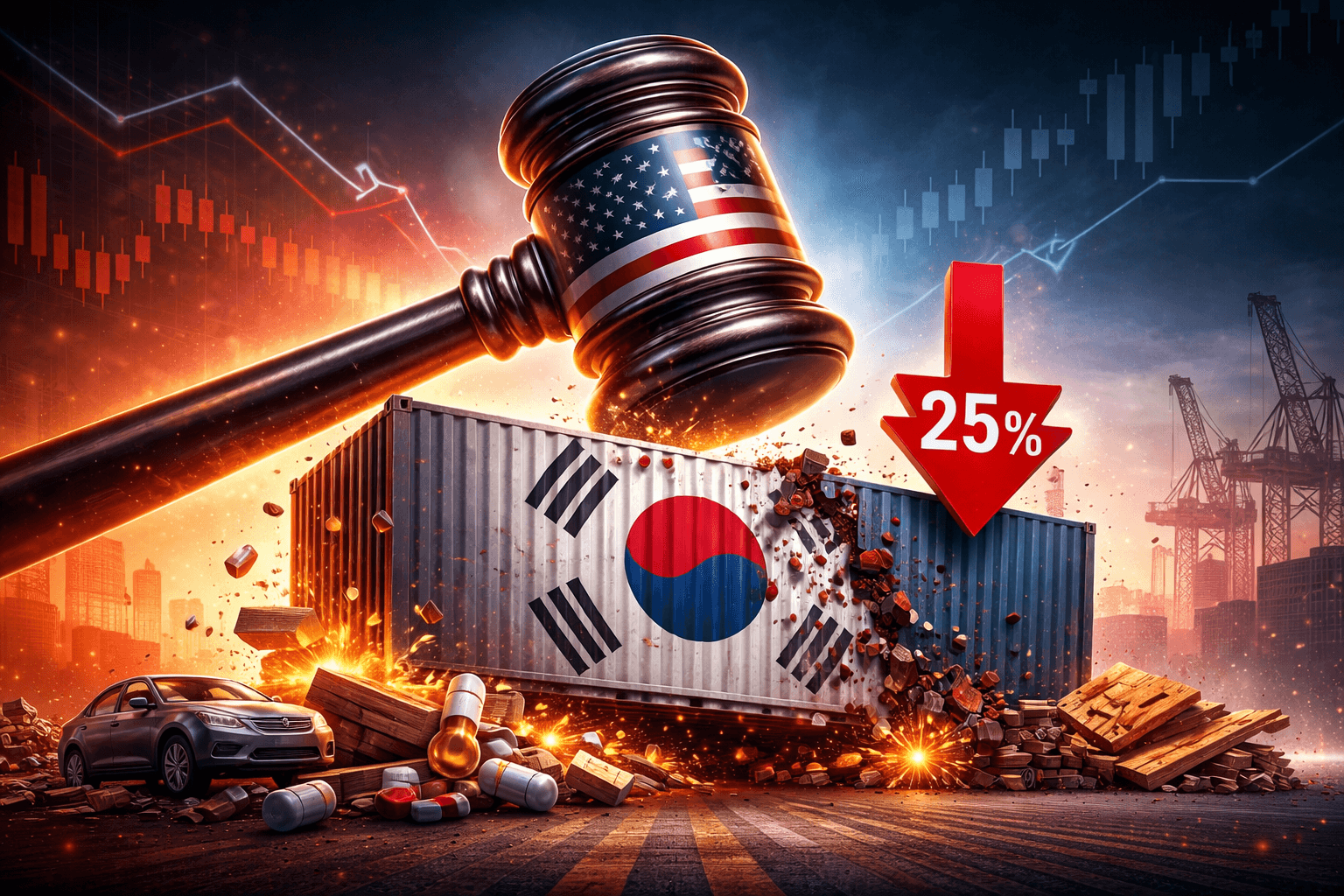
President Trump Imposes 25% Tariffs on South Korean Goods Over Trade Deal Delay
President Trump announced higher tariffs on South Korean exports, citing the parliament’s failure to ratify the 2025 trade deal agreed with President Lee Jae-myung.
Fact Check
The assessment is based on the strong evidence pointing to the Trump administration's use of Section 232 of the Trade Expansion Act of 1962 to impose tariffs on steel and aluminum. The source from C.H. Robinson, while not naming South Korea directly, specifically explains the mechanism of a 25% tariff on steel, a signature trade action of the Trump administration. Given that South Korea is a major steel exporter to the U.S., it is highly probable that it was subject to this tariff. The statement says the tariff was on "goods from South Korea," which is broad but accurate if it was applied to a major category of goods like steel, even if not all goods. The primary sources provided, including the USTR's Federal Register Notices and press release archives, are the definitive official records where such a tariff imposition would be documented. The existence of these highly authoritative sources for documenting the legal implementation of tariffs strongly supports that the evidence for this specific action exists within them. Therefore, the statement is considered likely true because a 25% tariff was imposed on a significant category of goods from South Korea, fitting the statement's description.
Summary
U.S. President Donald Trump stated that South Korea’s parliament has yet to approve the trade deal agreed with President Lee Jae-myung on July 30, 2025, and reaffirmed in October 2025. In response, Trump will raise tariffs on South Korean automobiles, timber, pharmaceuticals, and other goods from 15% to 25%. The tariffs target significant export sectors and will remain until the agreement is ratified, increasing economic pressure amid stalled legislative action.
Terms & Concepts
- Tariff: A government-imposed tax on imported goods, designed to protect domestic industries or influence trade negotiations.
- Trade Agreement: A formal arrangement between countries regulating trade terms, tariffs, and market access to foster economic cooperation.