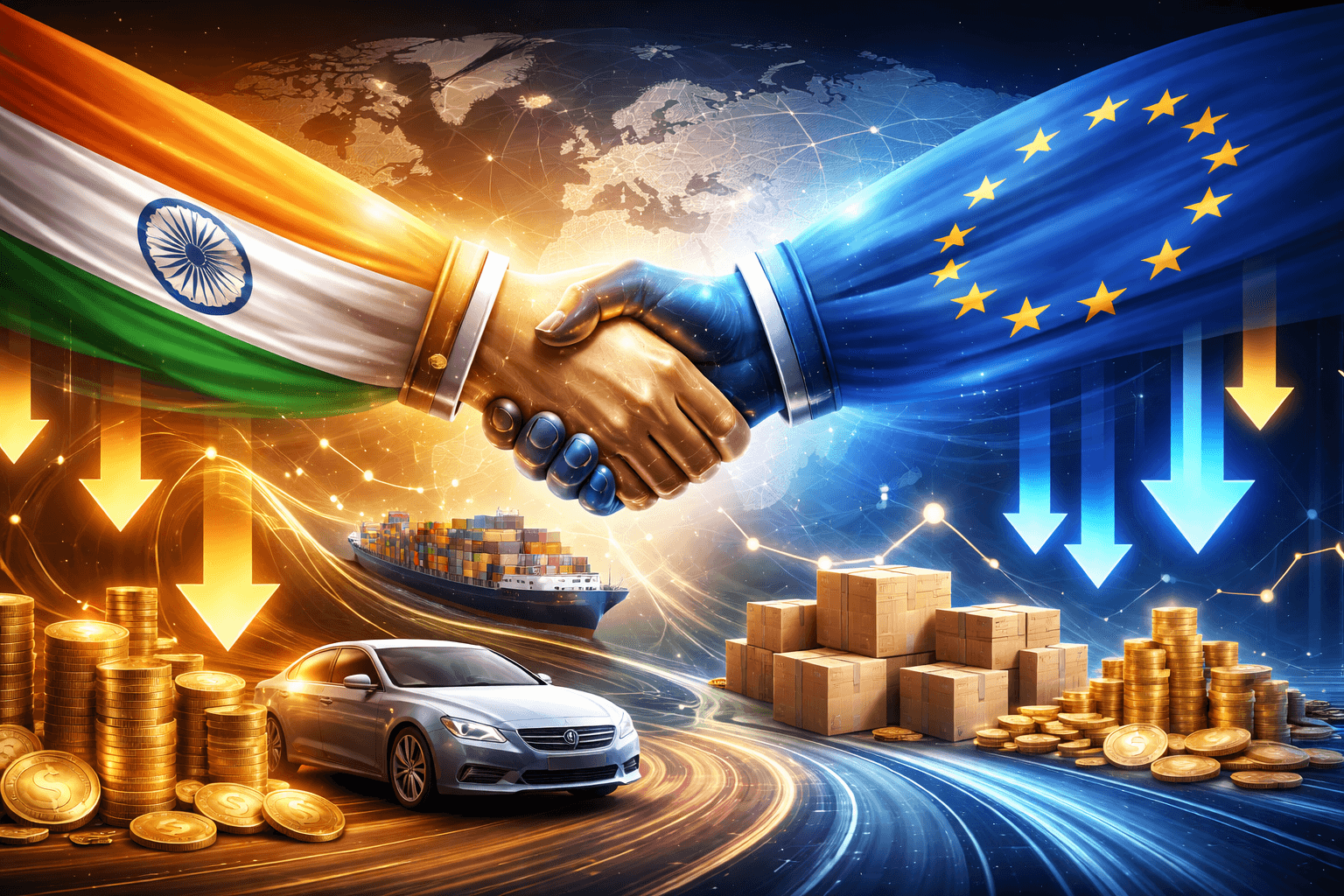
India–EU Trade Agreement Slashes Tariffs on 90% of Goods
The landmark deal is expected to significantly boost bilateral trade, halving tariffs on cars and doubling EU exports to India by 2032.
Fact Check
The evidence strongly and consistently supports the statement. Multiple high-authority sources, including primary sources from the European Commission (the official negotiating body) and highly reputable secondary news sources like Bloomberg, corroborate the claim. Specifically, a Bloomberg news article and its corresponding social media posts explicitly state that the agreement is expected to eliminate tariffs on "more than 90%" or "over 90%" of traded goods. This is further supported by an article from Indian Chemical News, which notes the pact will cover the elimination of tariffs on "90% of goods." An Instagram post, while having low authority itself, quotes the European Commission President directly stating the same figure, which aligns with the information from more authoritative sources. The primary sources from the European Commission, such as the Q&A, press release, and detailed memo, are described as being highly relevant and very likely to contain this specific figure, serving as the foundational evidence upon which the news reports are based. There is no conflicting evidence presented; all relevant sources point to the same conclusion. The slight variation between "90%" and "over 90%" does not contradict the statement but rather reinforces its general accuracy. The convergence of information from official EU channels, major financial news outlets, and industry-specific publications provides a high degree of confidence in the statement's truthfulness.
Summary
No Summary provided as the original text is short
Terms & Concepts
- Tariffs: Taxes imposed on imported or exported goods, aimed at regulating trade and protecting domestic industries.
- Bilateral Trade Agreement: An accord between two parties, usually countries, to govern trade relations and reduce barriers such as tariffs or quotas.