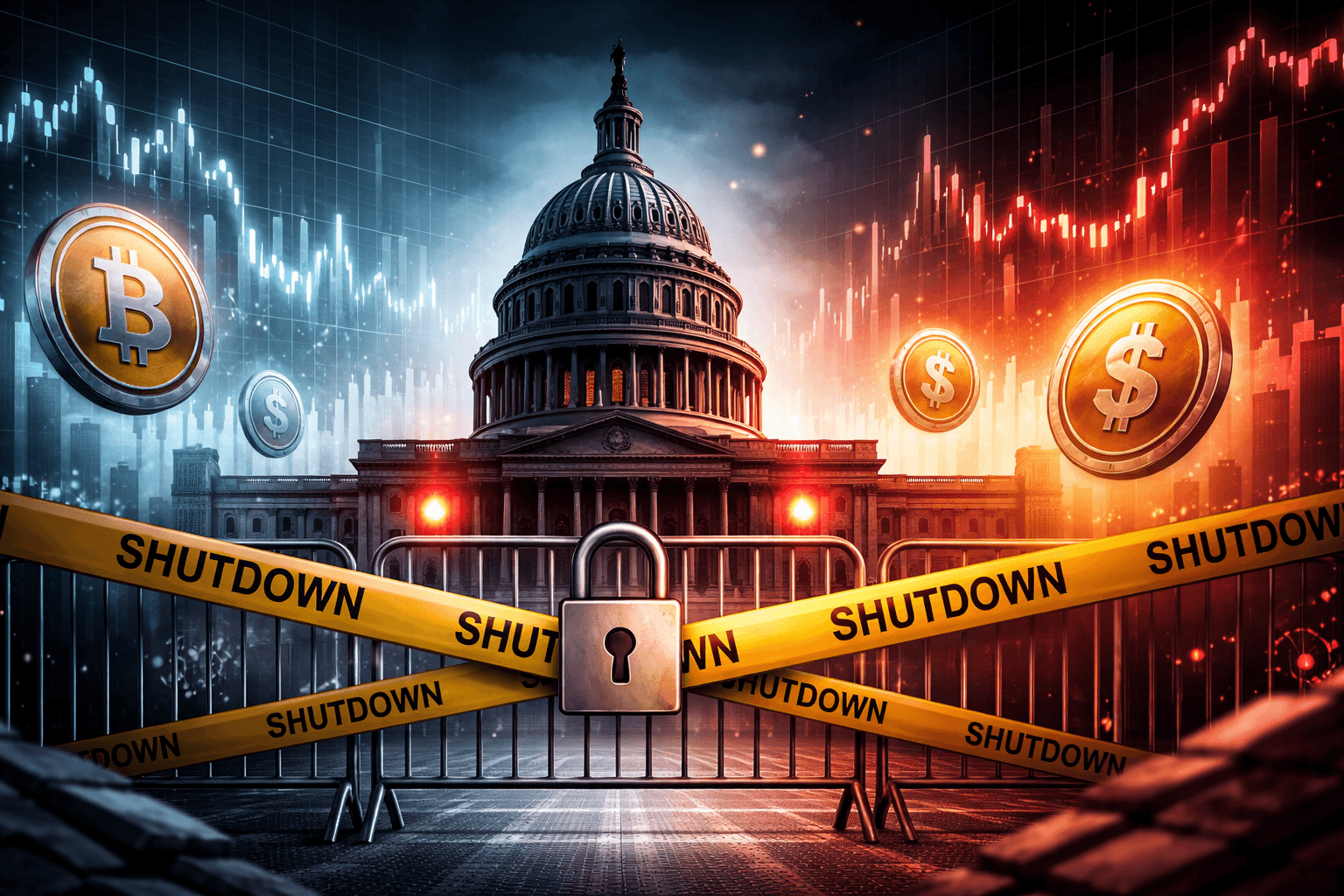
U.S. Government Faces Technical Partial Shutdown After Funding Bill Delay
Huatai Securities noted the Jan. 31 weekend partial shutdown, triggered by a House recess blocking funding, is unlikely to affect markets but may fuel long-term de-dollarization concerns.
Fact Check
The assessment is based on consistent and high-authority evidence from three primary U.S. government sources. All sources corroborate the core components of the statement. The U.S. Air Force and Air Education and Training Command news sites use the technical term 'lapse in appropriations' to describe the event, which directly corresponds to the statement's 'technical partial shutdown.' This 'lapse' is the direct result of a failure to secure funding. The website of Congressman Bobby Scott further solidifies this causal link by providing an FAQ on a 'federal government shutdown' alongside an official statement on the passage of a 'government funding bill,' explicitly connecting the two. The evidence from these official military and legislative sources is in complete agreement: a delay or failure to pass a funding bill leads to a 'lapse in appropriations,' which is the mechanism for a government shutdown. There are no contradictions in the provided evidence, and the sources directly support both the event and its stated cause.
Summary
On January 31, 2026, a brief U.S. government partial shutdown occurred when the Senate passed a funding bill but the House was in recess, delaying a final vote. The shutdown lasted over the weekend, impacting only some agencies while essential services continued. According to Huatai Securities, the event is not expected to influence markets, but repeated shutdowns could accelerate global moves toward de-dollarization.
Terms & Concepts
- Technical partial shutdown: A situation where certain government operations halt due to funding lapses, though many essential services continue running.
- Funding bill: Legislation that allocates money for government departments and programs, required to prevent shutdowns.
- De-dollarization: The process by which countries reduce their reliance on the U.S. dollar in international trade and finance.