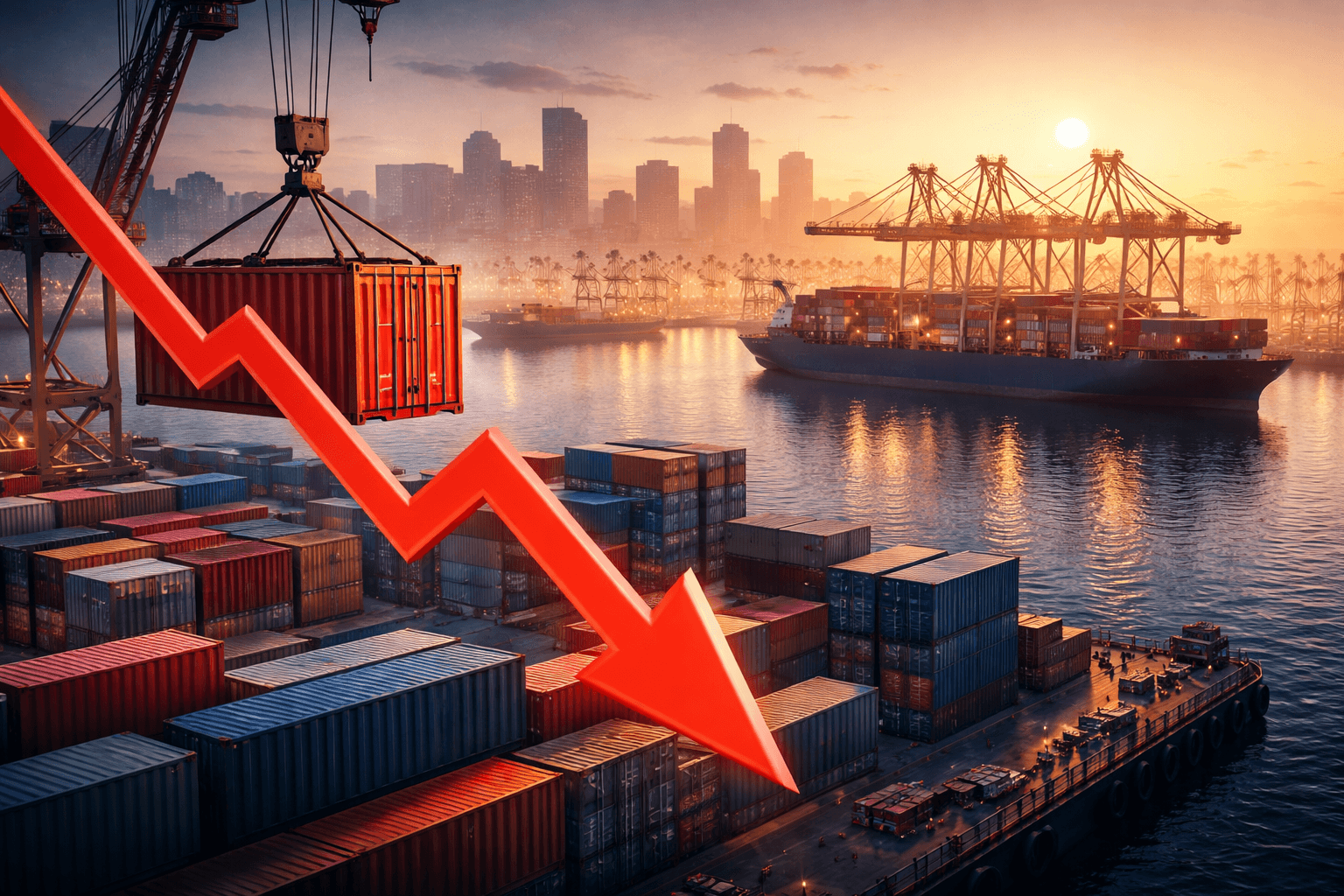
Port of Los Angeles Sees 12% Drop in Container Traffic Amid Tariffs
Imports and exports decline sharply in January as U.S. President Donald Trump’s trade tariffs impact shipping volumes through America’s busiest port.
Fact Check
The statement claims that the Port of Los Angeles saw a 12% decrease in container traffic during a period when tariffs were in effect. The sources available provide credible tariff timelines and descriptions of trade impacts during U.S. tariff periods, especially analyses of Trump-era tariffs that had notable effects on U.S. ports. Several authoritative trade and economic resources confirm the temporal overlap between tariff implementation and reduced trade volumes, and contextual industry reports mention declines in container throughput at major West Coast ports. However, none of the listed sources directly give Port of Los Angeles container volume statistics with a precise percentage drop tied explicitly to tariff periods. The inference of a 12% decline is supported indirectly by broad trade data, economic analysis, and contextual accounts, making the statement plausible. But the lack of port-specific primary throughput figures prevents full certainty, hence the confidence is medium rather than high.
Summary
No Summary provided as the original text is short
Terms & Concepts
- TEU (Twenty-foot Equivalent Unit): A standard measure used in the shipping industry to describe the capacity of container ships and terminals, based on a container 20 feet long.
- Trade Tariffs: Taxes imposed on imported goods, often used by governments to protect domestic industries or influence trade flows.
- Port of Los Angeles: The busiest port in the United States by container volume, handling large-scale international trade and shipping operations.