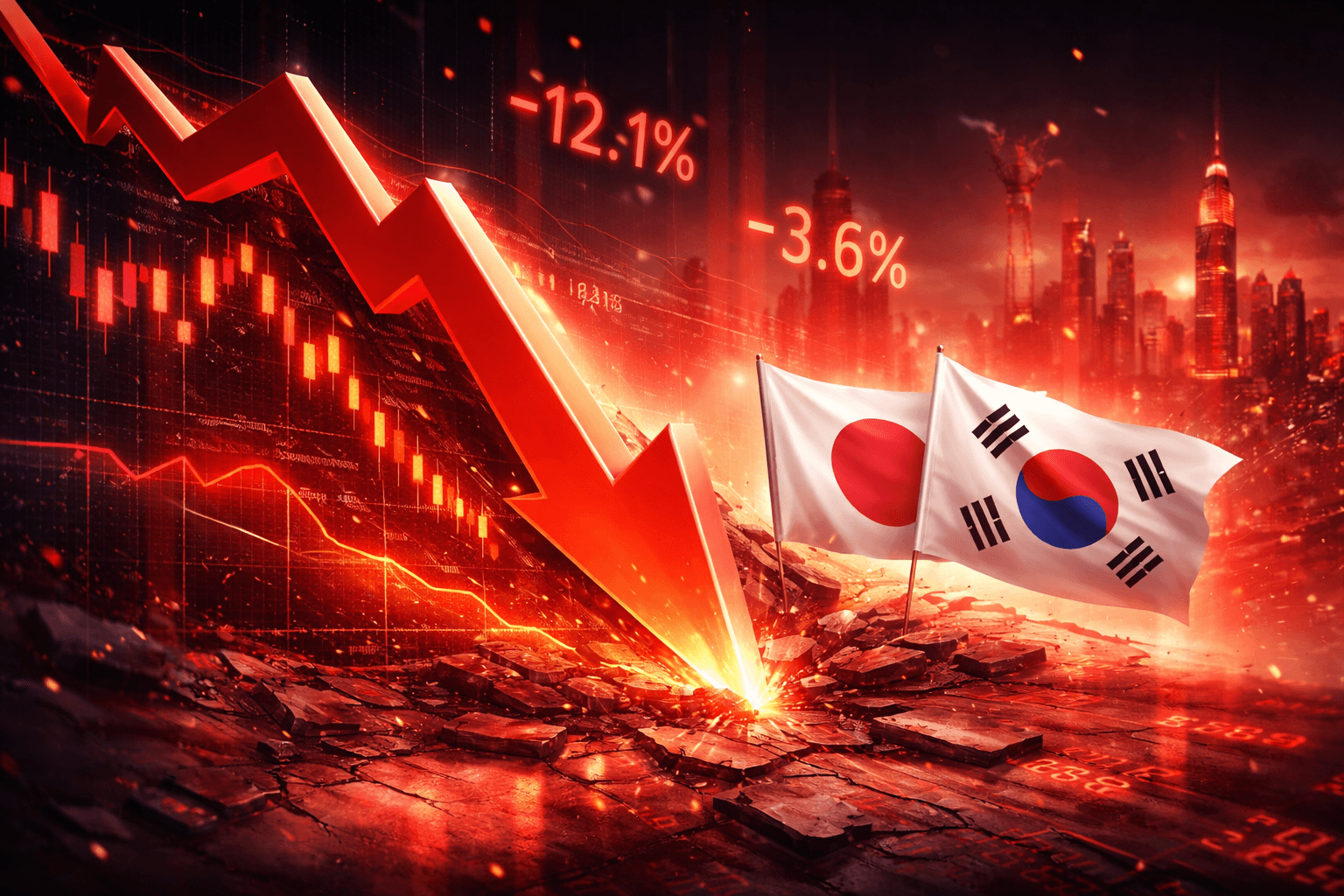
Asian Stock Markets Tumble with Panic Selling in Japan and South Korea
Asian stock indices experience steep declines, with South Korea’s KOSPI plummeting 12.11% following a trading halt, while Japan’s Nikkei 225 suffers its worst fall since April 2025.
Fact Check
Multiple credible, independent outlets report sharp, same-day declines in both Japan and South Korea. Reports from Bloomberg, Reuters, BBC, and AOL describe the KOSPI plunging around 7% with trading halts and characterize it as the worst selloff in many months, while Japan’s Nikkei fell roughly 3%. These are clearly significant moves. The accounts are consistent across sources, provide concrete percentages, and are contemporaneous with the trading session in question (early March 2026, Asia time). No material contradictions appear, and the magnitude and context (geopolitical shock, energy concerns) further support the classification of the declines as significant.
Summary
Asian stock markets saw significant drops, with South Korea’s KOSPI falling 12.11% after a trading halt, marking its biggest single-day drop in history. Japan’s Nikkei 225 declined 3.61%, reflecting widespread investor panic. The sharp declines signal heightened market fears amid growing global economic concerns.
Terms & Concepts
- Circuit Breaker: A trading halt mechanism automatically triggered when price declines exceed preset limits, designed to curb panic selling.
- KOSPI: The Korea Composite Stock Price Index, representing South Korea’s main benchmark for equity performance.
- Nikkei 225: A leading stock market index in Japan tracking 225 major listed companies.