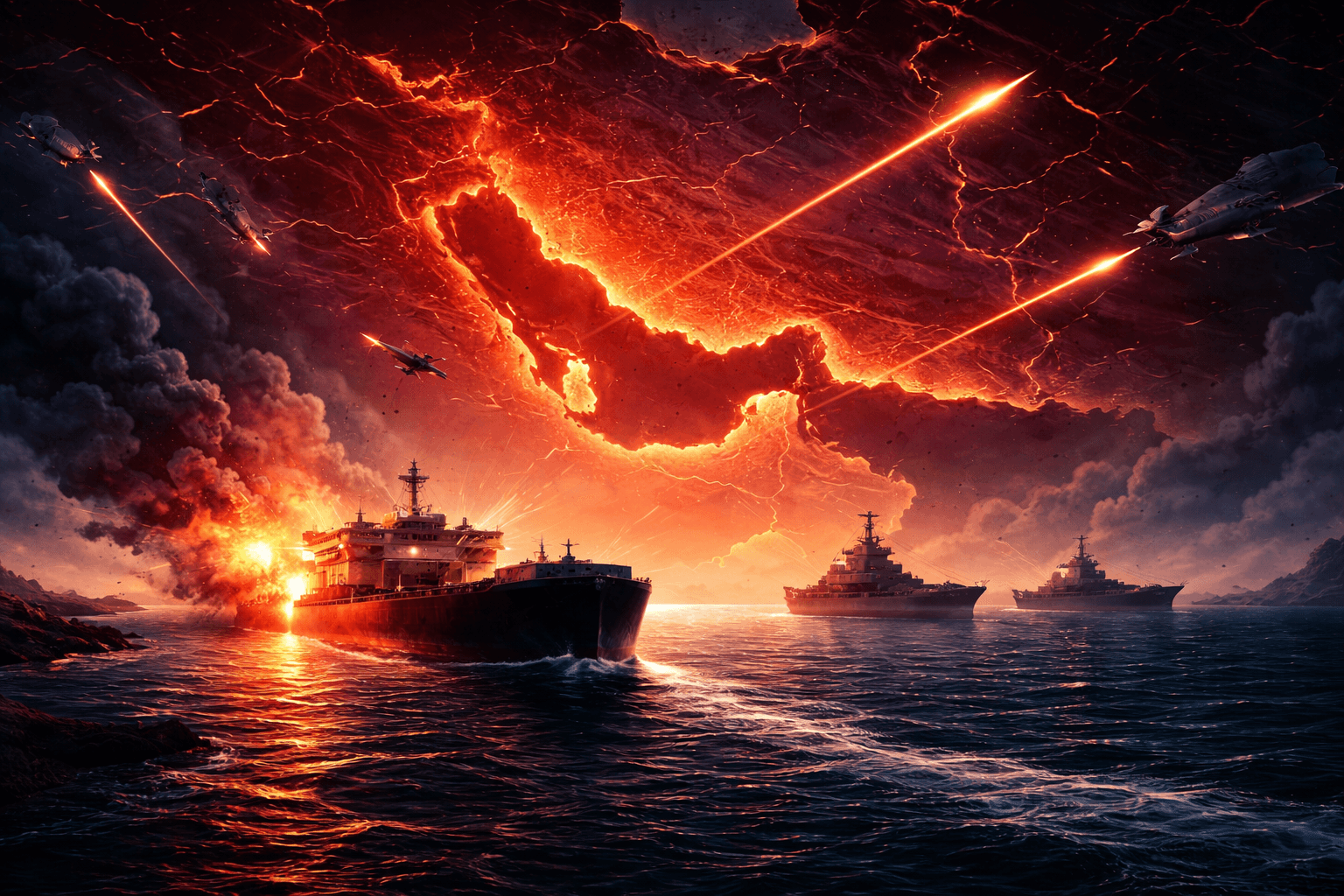
Iranian Security Chief Warns of Ongoing Instability in Hormuz Strait
According to Iran’s Khatam al-Anbiya Central Headquarters, Tehran’s stance has shifted from proportional retaliation to continuous strikes, renewing concerns over oil flows and security in the Strait of Hormuz.
Iran’s rhetoric over the Strait of Hormuz escalated further after a spokesperson for Khatam al-Anbiya Central Headquarters said its policy of “proportional retaliation” had ended and that “continuous strikes” would follow. The spokesperson also said the U.S. could not control oil prices through “artificial measures,” warned that oil could reach $200 per barrel, and stated that Iran can fully block the Strait of Hormuz. The new comments build on earlier threats to halt oil transit through the strategic waterway, intensifying concerns about maritime security and possible disruption to global energy shipments through the Persian Gulf.
- Strait of Hormuz: A strategic maritime chokepoint linking the Persian Gulf to the Gulf of Oman, through which a significant share of global oil shipments passes.
- Maritime security: The protection of shipping routes, vessels, and cargo from conflict, disruption, or other threats at sea.