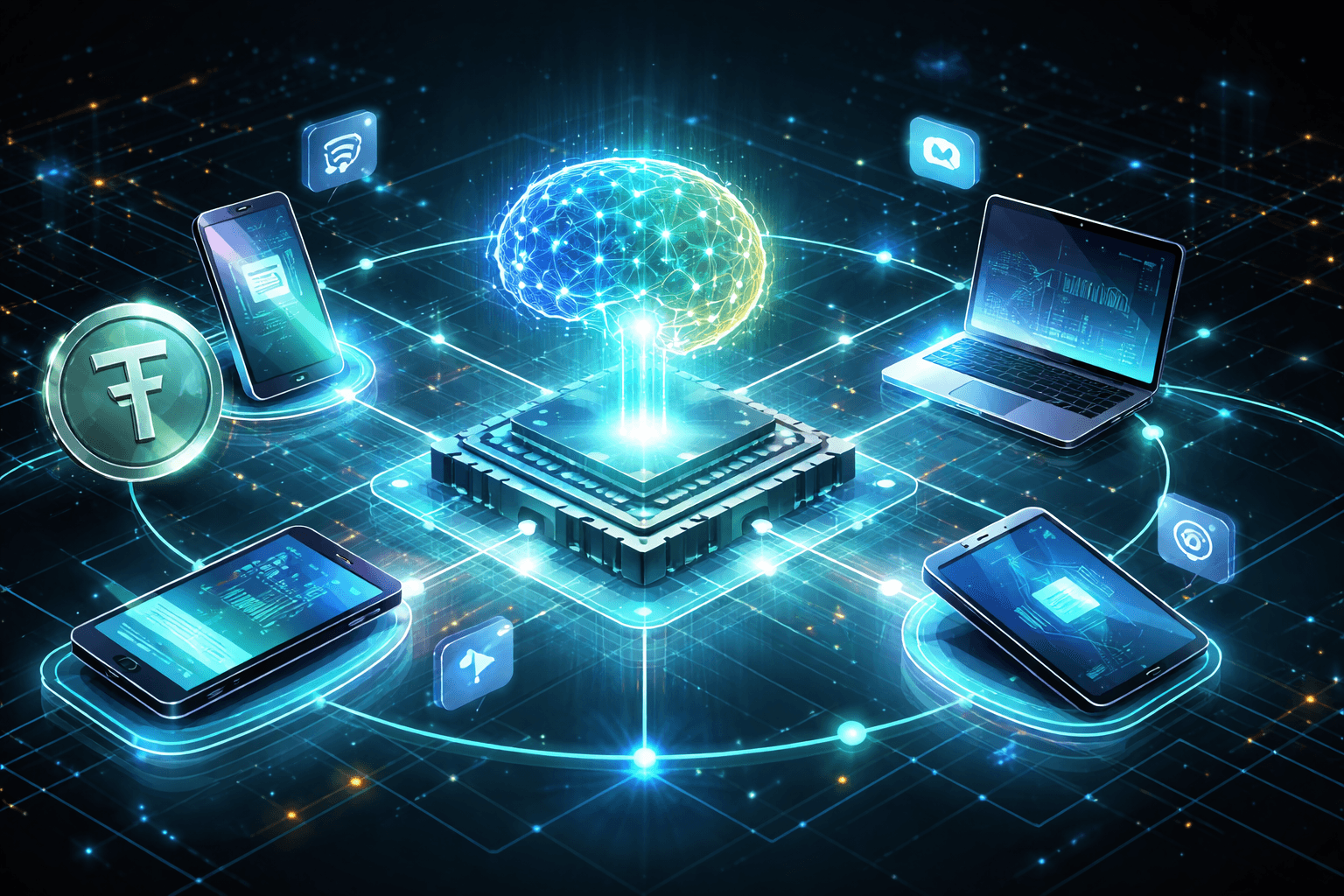
Tether Unveils QVAC SDK for On-Device AI With Peer-to-Peer Distribution
According to Tether, the open-source QVAC SDK lets developers run llama-based AI applications fully on-device across major platforms without depending on cloud servers.
USDT
Fact Check
The official Tether announcement, "Tether Launches QVAC SDK as the AI Universal Building Block that Runs, Trains, and Evolves Intelligence Across any Device and Platform," directly states that QVAC SDK is "fully open-source" and "cross-platform," and that it enables developers to "build, run, and fine-tune AI directly on any device." The same source explicitly says applications can run across iOS, Android, Windows, macOS, and Linux, matching the claim about major mobile and desktop operating systems. It also states that peer-to-peer functionality is a primary component, including "decentralized model distribution" and "delegated inference without centralized infrastructure." The Odaily link was traced to this Tether announcement, further indicating the claim derives from the primary source. Corroboration searches in this run did not add much independent evidence, but they did not surface contradiction either.
- Reference: 1
Summary
In an official announcement, Tether said it released QVAC SDK, an open-source toolkit that allows developers to run llama-based AI applications fully on-device across major platforms without relying on cloud infrastructure. The company’s release expands its previously disclosed plans for cross-platform local AI software and underscores Tether’s push beyond its stablecoin business into open-source AI development.
Terms & Concepts
- SDK: A software development kit is a package of tools, libraries, and documentation used to build applications for specific platforms or services.
- peer-to-peer: A networking model where devices communicate directly with one another instead of routing activity through a central server.
- decentralized inference: AI processing performed across distributed devices or nodes rather than on a single centralized cloud system.